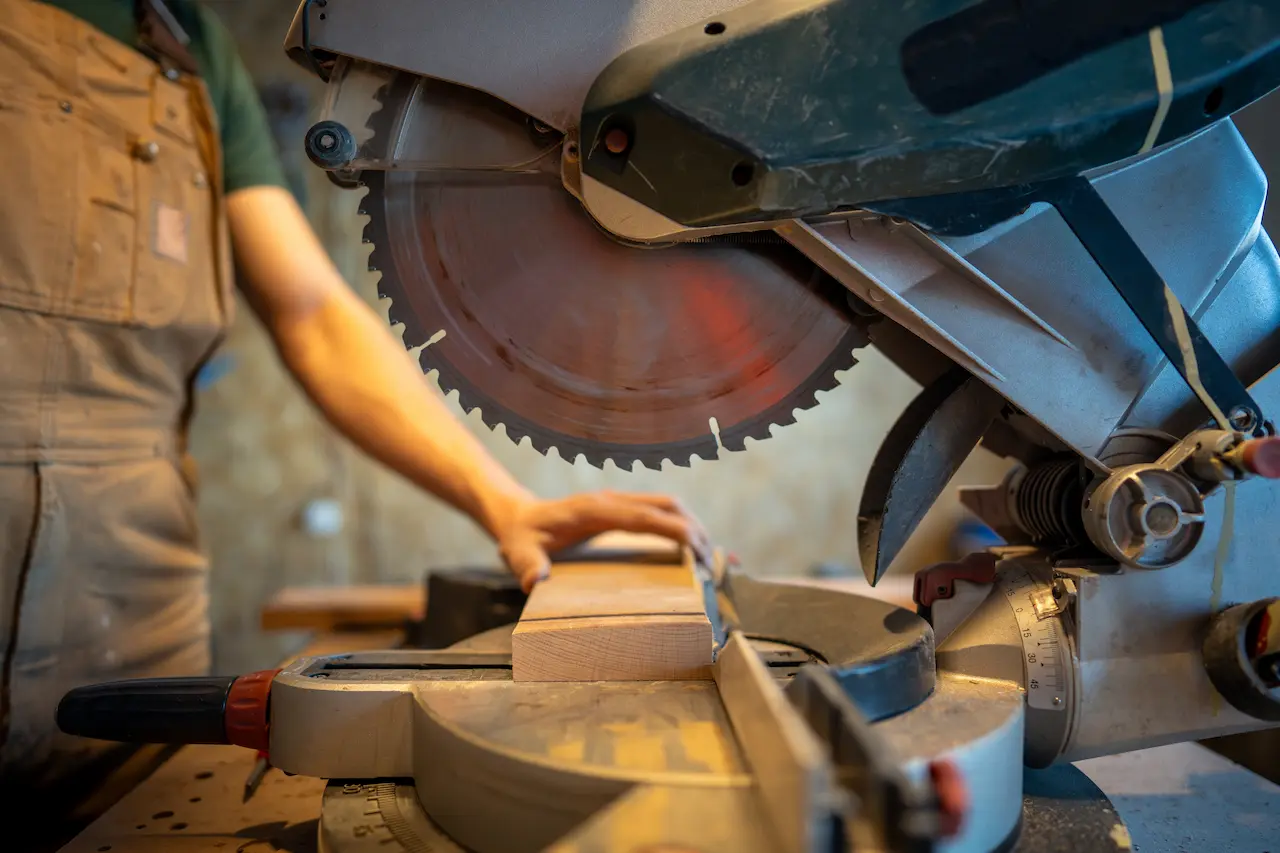
Carbide Tooth Detachment, Blade Breakage, and Sudden Saw Blade Failures
Most people don’t go looking for a resource center about circular saw blades. They find one because something went wrong—fast—during a normal day of work or a home project.
If you’re here because a saw blade failed, a carbide tooth (tip) flew off, a blade cracked, broke, shattered, or something struck you (or someone you love), this page is meant to give you:
- Clear, practical next steps
- Plain‑English explanations of how circular saw blade failures can happen,
- A simple evidence checklist (because evidence disappears quickly), and
- A starting point to understand when a product defect or manufacturing defect may be involved.
If this is an emergency: stop reading and seek medical help immediately. For eye injuries, treat it as urgent. Call 911 now and don’t delay! Our defective product attorneys will be here to help you nationwide after you receive the emergency care you need.
Quick Start Guide to Handling Circular Saw Blade Failures & Potential Claims:
If your injuries are medically stabilized, then here is our guide to the most important information you need to know, up front, about how to handle a potential saw blade manufacturing defect case:
- Preserve the blade exactly as‑is (do not clean it, sharpen it, or “test it again”).
- Preserve the packaging (model number, bar code, lot/date codes can matter).
- Save your receipts and any documentation of your blade purchase, including when and where you bought it.
- Save fragments (carbide teeth/tips/shards) in a rigid container.
- Take photos of everything early (blade, saw, arbor, guards, setup, packaging, and the scene).
- Don’t return the blade to the store for a refund and don’t ship it to anyone (including the manufacturer) until you’ve gotten advice.
If you want help thinking through what to preserve, call us at (803) 350-9230. Otherwise, read on to learn more about what to do in cases of sudden saw blade failures, carbide tip detachment, or other blade injuries caused by potentially defective saw blades.
What Counts as a “Defective Saw Blade” (and What Doesn’t)
A “defective saw blade” can mean different things in different circumstances. The most common failure types we see people ask about include:
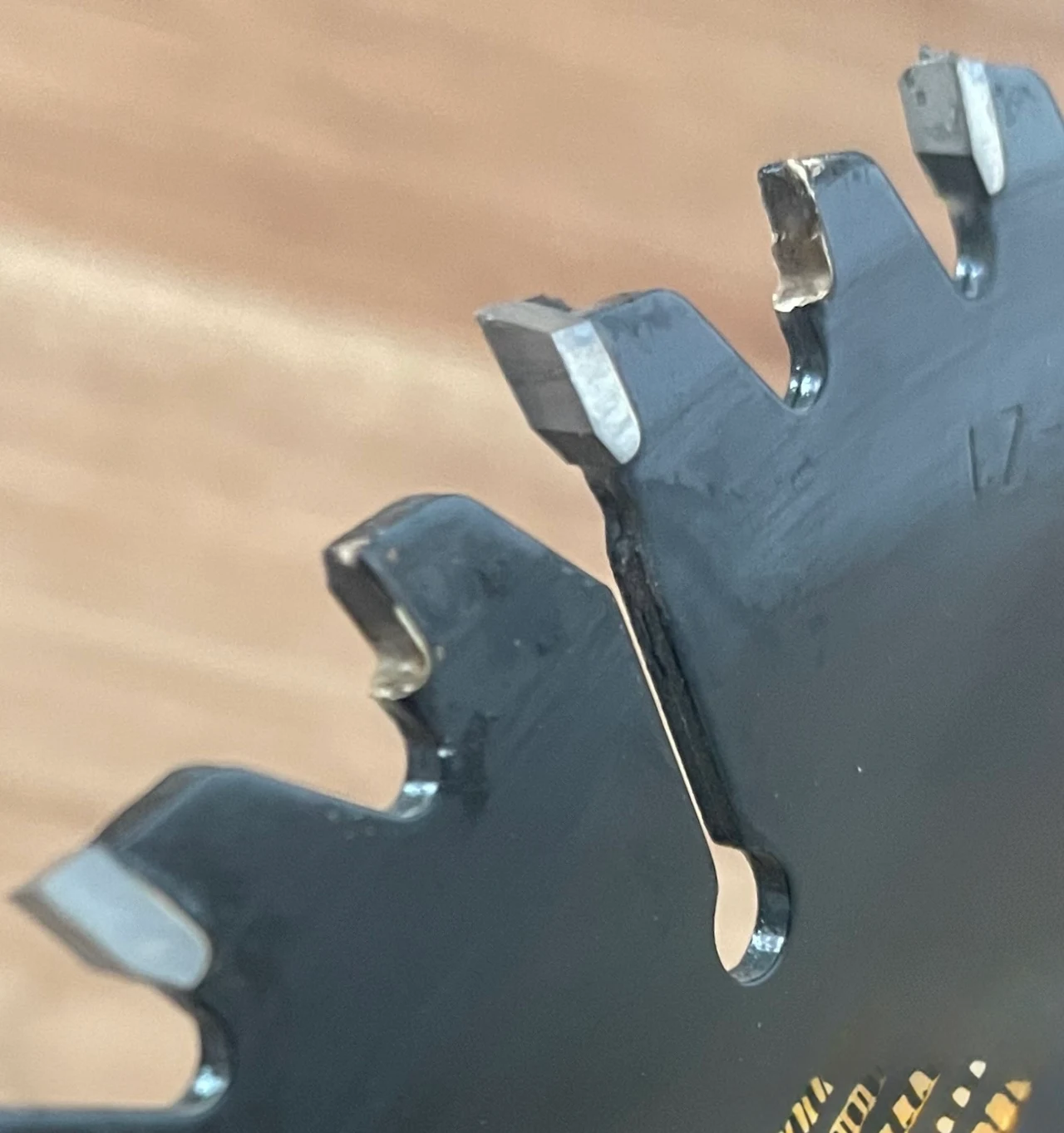
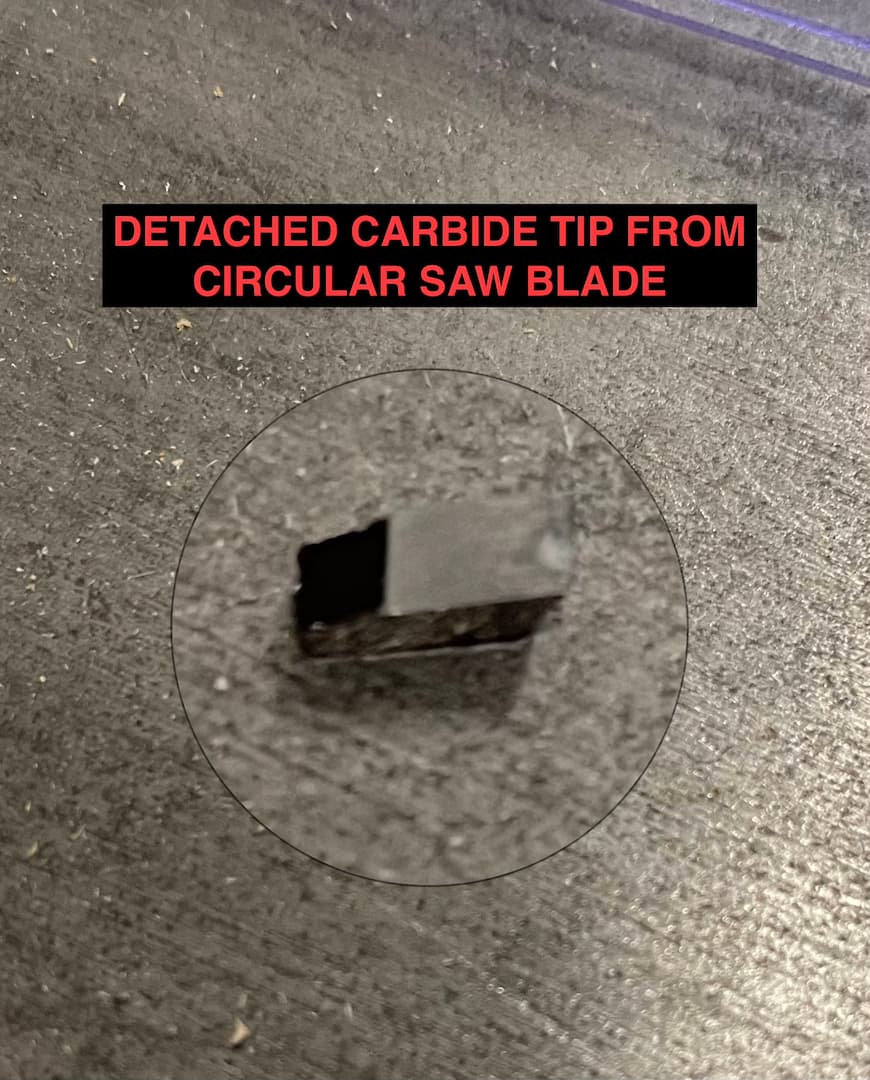
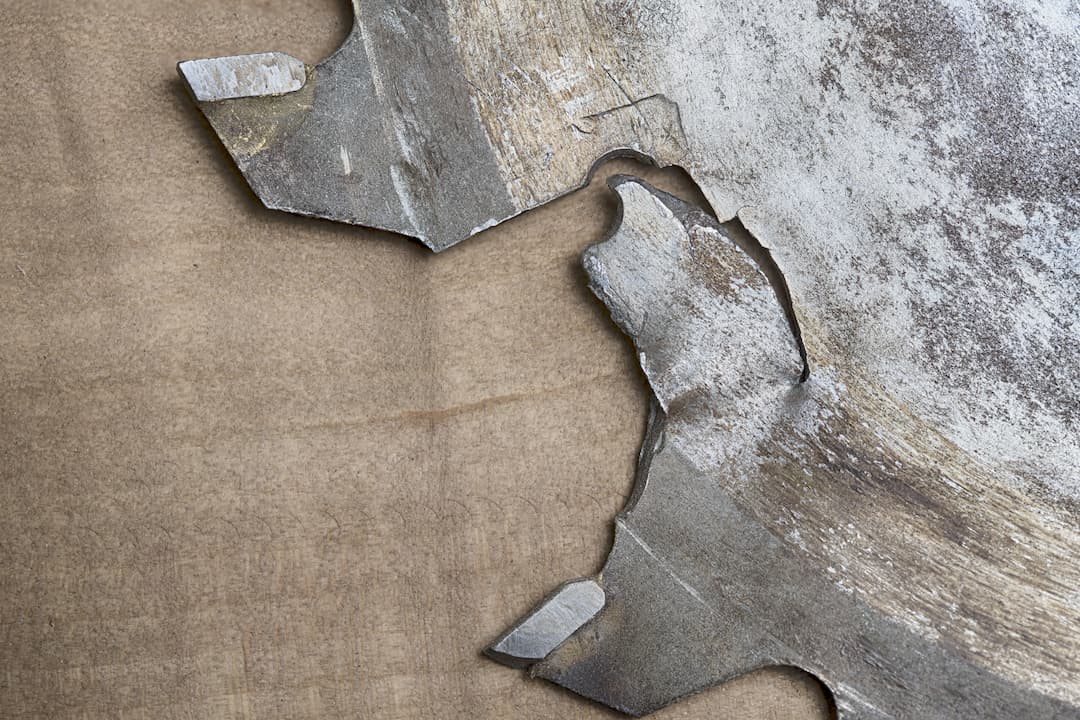
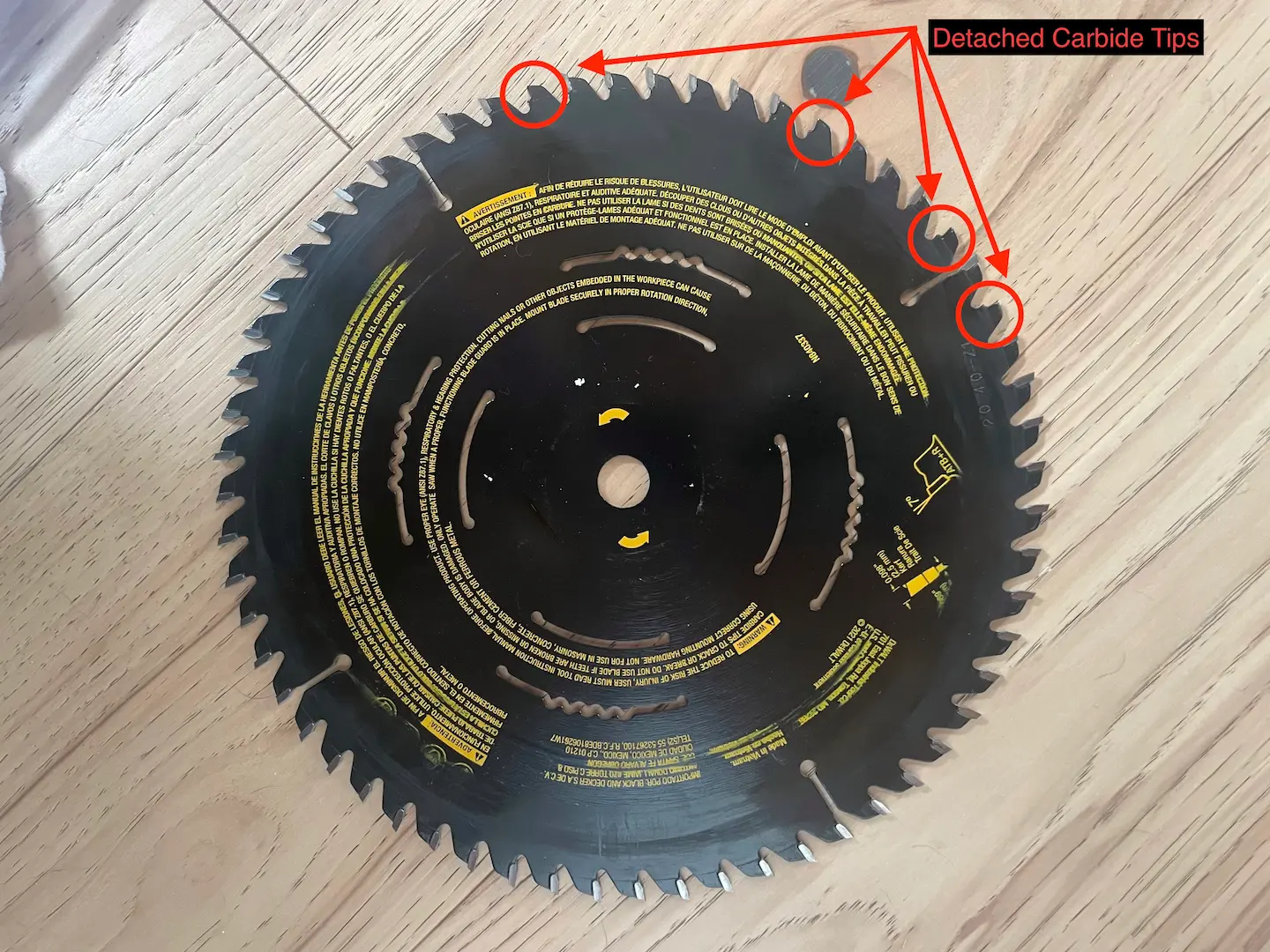
- Carbide tooth detachment (tooth/tip flies off): Many blades use carbide‑tipped teeth attached to a steel blade plate. If a tooth or tip detaches, it can become a projectile—like a small bullet speeding through the air.
- Blade cracking or catastrophic fracture: A blade can crack or fracture due to issues like material defects, heat‑treat problems, structural weakness, or manufacturing error.
- Warping, wobble, or loss of tension: If a blade isn’t flat or stable at speed, vibration increases and the risk of dangerous events rises.
- Abnormal vibration, noise, or instability that appears “out of the box”: Not every vibration is a defect, but when a blade behaves unpredictably in normal use, it deserves a careful look.
Additionally, while common sense makes it clear that blades shouldn’t fail spontaneously and without justification, there are circumstances in which user error can cause or contribute to a person’s injuries in cases like these. For example, sometimes a blade fails because of:
- Striking hidden fasteners (nails/screws);
- Incorrect blade selection (wrong blade for the material);
- Improper installation, damaged arbor/flange, or missing washers;
- Operating outside the tool’s specifications; or
- Heavy wear, damage, or prior impacts.
Still, when a blade fails in a way an ordinary user would not expect during normal conditions, a defect absolutely may be part of the story—and the only honest way to know is to preserve the evidence and investigate.
Carbide Tooth/Tip Detachment: Why it can be Catastrophic
Carbide tooth detachment is one of the most serious scenarios involved in saw blade failures and injuries caused by circular saw blades because it combines two facts:
- The tooth/tip is hard and sharp, and
- The rim of a blade can be moving extremely fast.
For illustration: a 10‑inch blade at 6,000 RPM has a rim speed of roughly 80 meters per second—about 180 mph (around 260 feet per second). A small carbide fragment at that speed can cause severe injury, especially to the eyes and face. Again, it basically becomes a bullet, speeding through the air at high speeds. If the user is struck by something like this, it can cause serious injury, and potentially even death. Imagine a projectile like that going into someone’s eye, and then going far enough to pierce the brain. These circumstances can turn fatal, fast, which is yet another reason why these cases are so important to investigate thoroughly.
How Carbide‑Tipped Blades are Made
Most carbide‑tipped saw blades are essentially two different materials working together:
- Blade plate (steel): the main body of the blade. These are usually stamped out or die-cast in manufacturing facilities (often overseas in low-cost labor areas like China or Vietnam). Interestingly, if the die or molding/tooling used in making the blade plate is too old or has been sold from a large manufacturer to a smaller/cheaper manufacturer, the final quality of the finished product can potentially degrade. This is why where and how a tool or saw blade is made matters.
- Carbide tip/tooth: the cutting insert attached at each tooth location. These carbide tips are usually made of special alloys featuring tungsten carbide that are designed to be extremely high-strength and stand up to tough cutting conditions. That’s why under normal conditions (and even fringe/stretch conditions) blades should have no issues keeping those tips attached.
To join carbide to steel, manufacturers often use a high‑temperature joining process commonly referred to as brazing. In simple terms, brazing uses a filler metal that melts and flows between the carbide and steel to create a strong joint. This filler material is braze material, and a flux is often applied during the brazing process to help “wet” the braze material so that it “flows” effectively, creating an extremely high-strength bond between the tip and the blade. In fact, some experts argue that this bond should be so strong, metallurgically speaking, that the tip or blade itself should crack or break before the braze bond does.
This brazing process can be delicate, and must be carefully controlled so that the final product matches a manufacturer’s internal specifications and standards. And those standards, in turn, should be high enough and stringent enough to ensure that users are completely safe, at all times, during their use of the product in ways both reasonable and foreseeable. Common issues that can arise in poorly controlled manufacturing processes include issues like:
- Dirty surfaces or Poor Surface Prep: if surfaces including the blade blank and the carbide tip tooth aren’t properly cleaned and prepared for brazing, then the braze joint weld can be compromised.
- Incorrect Braze Temperature or Brazing Time: brazing is a manufacturing process that requires careful quality control and alignment with specifications and standards (including both manufacturing standards and more broad national and international metallurgical and engineering standards). If brazing is done at the wrong temperature (either too hot OR too cold), or the process is done for the wrong amount of time (too long OR too short), the braze joint can be compromised and the integrity of the saw blade can be severely compromised. This is one of many reasons that quality control and quality assurance at the manufacturing level is so important.
- Wrong Braze Compound or Chemical or Alloy Makeup: If the wrong materials are used, then of course the final product won’t match the specs it was intended to meet. Therefore, ensuring that the braze compound or braze alloy used in the bonding of the carbide tips to the blade disk is the RIGHT material is extremely important.
- Oxidization within the blade metal or the braze joint itself: most people know that metal is susceptible to rust. Therefore, if the metals and alloys involved in the manufacturing process are not protected and treated correctly, then oxidization can rapidly degrade the strength of the component materials and/or of the bond between the carbide tips and the blade blanks themselves.
- Poor quality control on the stamping or die cutting of the blade blank: interestingly, if the tooling or dies do an imperfect job of creating the steel blade blanks, then tiny metal fragments can exist on the surface of the blade. Those fragments can get mixed up in the braze compound and then weaken the integrity of the joint formed between the blade blank and the carbide tip itself when the final brazing is done.
- Porosity in the braze joint or other voids within the materials: if there are errors in the manufacturing process, including any of the ones listed above, then the material bonding the tips to the blades can be porous and have voids within them. These voids look like craters on the surface of the moon when viewed microscopically. The existence of bubbles like this means that the bond or braze joint is not solid all the way through, which can be a sign that the strength of the bond is much weaker than it was intended to be.
Useful Terms You May See (and what they mean):
- Carbide tip/tooth: a hard cutting insert (often tungsten carbide)
- Brazing: high‑temperature joining using filler metal to bond carbide to steel
- Flux: a chemical that helps the filler metal flow and bond cleanly
- Wetting: how well the molten filler spreads across surfaces (poor wetting can mean weak bonding)
- Porosity/voids: tiny gas pockets in the filler metal that can reduce joint strength
- Failure mode: the “how” of what went wrong (tooth detachment, plate crack, warp, etc.)
If you’re a consumer, we’re not trying to make you feel like you need to become a product engineer or forensic metallurgist overnight. Rather, we share this information with you in the interest of helping you understand why the blade and tooth joint of a circular saw blade can lead to some of the most important evidence in a tooth‑detachment injury. If the joint is bad, then tips can fly off of blades—and that’s when people can start getting hurt.
Defect vs. Misuse vs. Normal Wear: Why Investigation Matters
When someone calls a law firm after a saw blade injury, a good investigation usually asks the same core questions:
What a Defect Investigation Typically Looks At
- Was the blade new, lightly used, or worn out?
- Was the blade installed correctly?
- What saw was it used on (table saw, miter saw, circular saw)?
- What material was being cut (or was the blade coasting/spinning at the time)?
- Are teeth missing? Are there cracks, discoloration, or unusual wear patterns?
- What do packaging labels show (model number and codes)?
- What do medical records show (in cases where injuries have occurred)?
The goal isn’t a quick assumption
A responsible approach is to follow the evidence, not to assume the user did something wrong, and not to assume a brand is at fault without proof.
“In a product liability case involving a saw blade or carbide-tipped circular saw blade, the blade and the tips themselves are crucial evidence. After medical care, the most important thing you can do is preserve the blade, the packaging, and any fragments exactly as they are.”
— Robert F. Goings, Founder and Lead Trial Attorney at Goings Law Firm, LLC
Injuries We Often See from Saw Blade Failures
Saw blade incidents can cause:
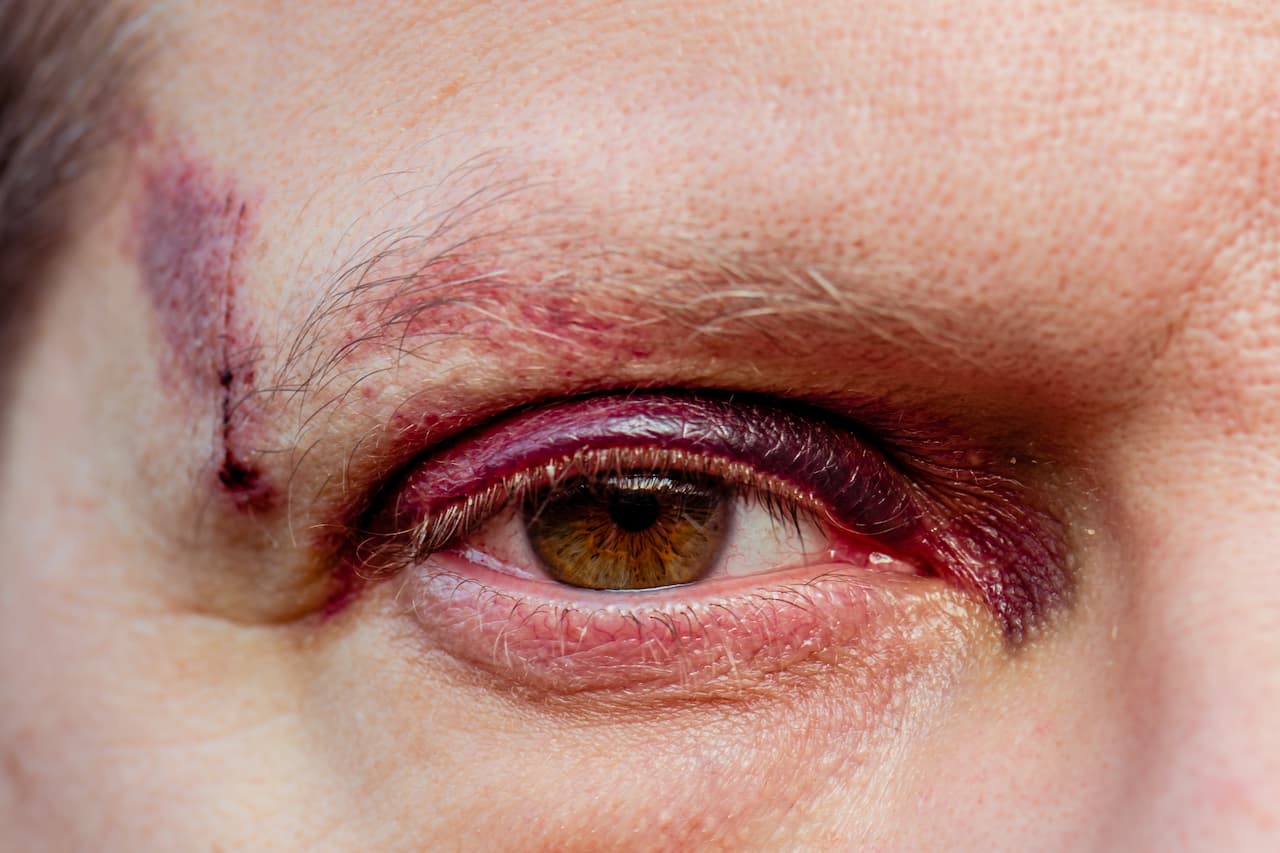
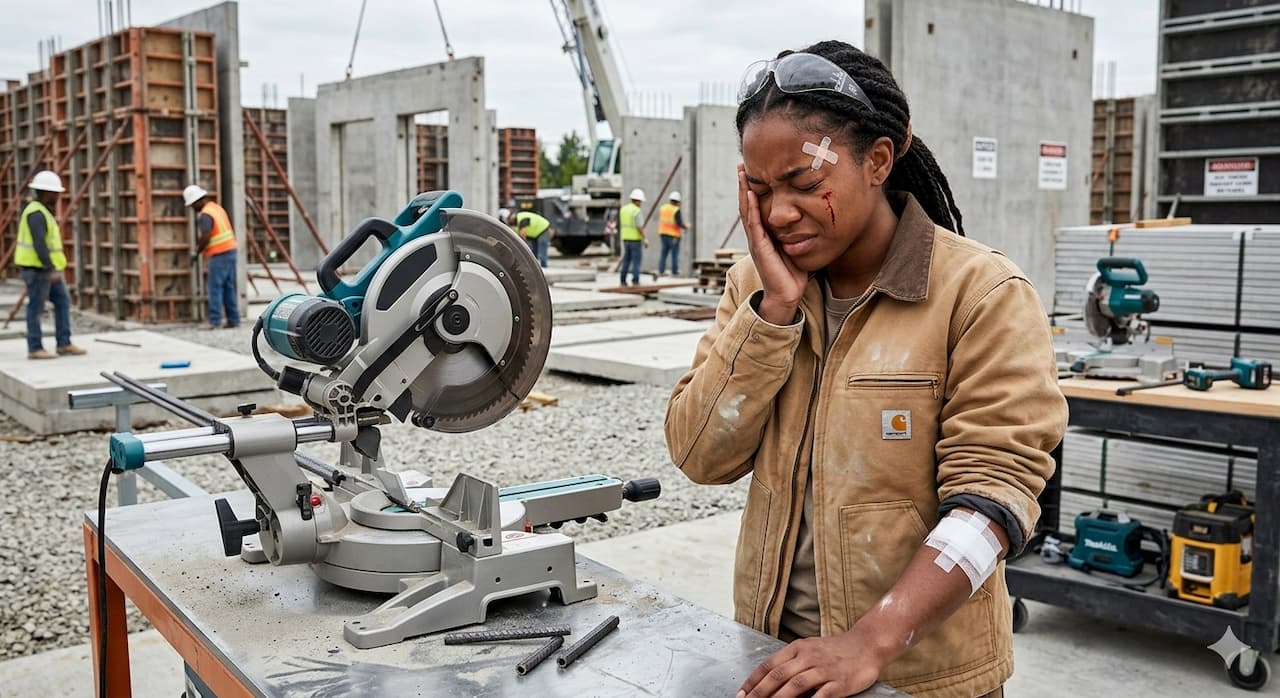
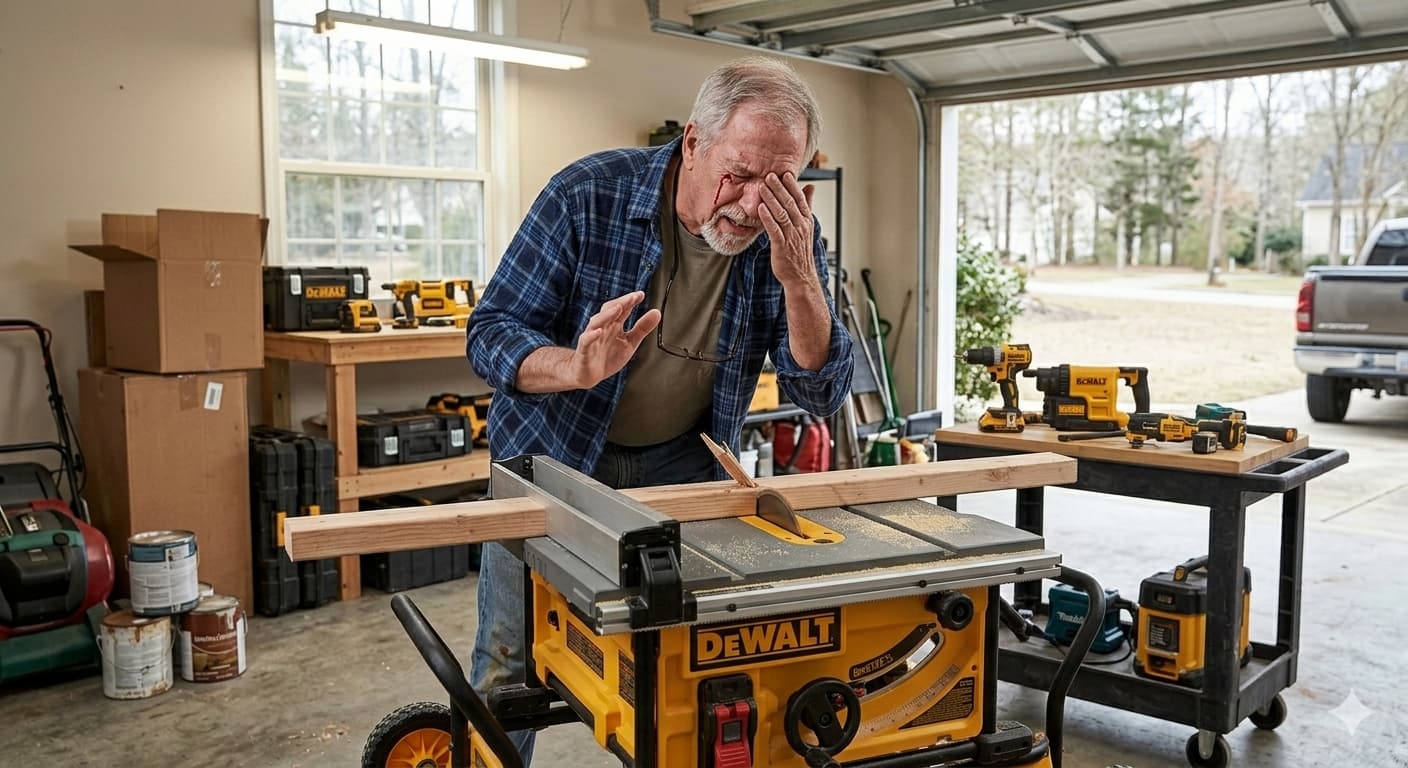
- Eye injuries (including foreign body injuries, penetration injuries, permanent vision loss)
- Facial injuries (including lacerations, fractures, dental trauma)
- Hand and finger injuries (including tendon damage, nerve damage, amputations)
- Deep lacerations and long-term scarring
- Psychological trauma after a sudden high‑violence event
- Lost income and long‑term limitations
- Lost jobs and ended careers for those who lose an eye or a finger and can’t go back to the work they were doing before
Eye Injuries Deserve Special Emphasis
Eye injuries, in particular, are uniquely life‑changing. And while that means it’s important to be careful when using tools and saws, the sad truth is that even careful users can be injured if a product they are using fails unexpectedly.
“In product liability cases involving eye injuries and permanent vision loss, when we investigate whether or not someone has a case, we’re paying a lot of attention to physical evidence, warnings, foreseeability, and causation—rarely just one single fact. That’s why lawyers experienced in these types of products liability and manufacturing defect cases are so valuable—as a consumer, you don’t want to be working with someone who is doing everything for the first time alongside you. You want someone who has seen this movie before and knows how to handle the overall process, from start to finish.”
— Franklin McGuire Jr., Trial Attorney at Goings Law Firm, LLC
Evidence preservation checklist (this can make or break a case)
If a tooth flies off or a blade fails on you while you’re working with a table saw, circular saw, or other piece of equipment that uses a saw blade, the case often comes down to what can be proven later, including though expert investigation and testing of the physical evidence involved. Evidence disappears fast because people understandably:
- Clean up
- Throw away packaging
- Accept a refund/exchange, and/or
- Send the blade back to the manufacturer when customer service asks for it.
The Golden Rule: Don’t “Improve” the Evidence
As a default, we always advise people that they should preserve the evidence and preserve it in as close to its original form as possible. This means:
- Don’t clean it.
- Don’t sharpen it.
- Don’t grind it.
- Don’t use it or otherwise run it again.
- Don’t “test” it.
- And, of course—don’t throw it away or dispose of it! If you don’t have it, you can’t test it, so evidence preservation in situations of saw blade failures and carbide tip detachment is extremely important.
Engineers and metallurgists often need to see surfaces exactly as they were at the time of the failure, so again, don’t try to clean or otherwise change a circular saw blade that’s had a tooth fly off it during use. Preserve the evidence, and get it to your lawyer who can help document its change of custody and get it into the hands of an expert who can investigate its failure mechanism(s).
What Evidence Should You Preserve? (and Why it Matters)
1) The Blade (As‑Is)
Even if it looks “mostly normal,” missing teeth, cracks, and fracture surfaces are critical. Often the most important and telling information can’t be seen with the naked eye, either, which is why getting the potentially defective blade into the hands of a saw blade expert, quickly, is so important. If you’re with a good attorney and law office that has handled these types of cases before, then they will know the right expert to call for the case.
2) All the Saw Blade Fragments You Can Find
Carbide tips/teeth, chips, shards. Use a rigid container so fragments don’t break further, and search the job site to ensure you are able to capture and preserve as much relevant physical evidence as possible.
3) The Packaging and Inserts
Model number, bar code, lot/date codes, and warnings often matter more than people realize, as does proof of purchase and information from the receipt showing when and where the potentially defective saw blade was purchased.
4) The Saw/Tool and Key Mounting Parts (if Possible)
Arbor, flange, washers, blade nut, throat plate insert, guard components—anything that bears on installation and stability is worth preserving, too.
5) Photos and Video
Take photos and video of the scene as early as possible, including:
- Both sides of the blade
- Closeups of missing tooth locations
- The saw setup and the work area
- The packaging labels, and
- The material being cut (if relevant and available).
6) Proof of Purchase
Receipt, order confirmation email, loyalty account record, credit card statement, etc. Again, it’s extremely helpful to be able to track back when and where the blade was sourced from. Many manufacturers will even stamp blades with serial numbers and lot codes so that the potentially defective circular saw blade can be tracked all the way back to a specific batch number, which can be important in preventing further injuries to other people who might also have bad blades from a poorly manufactured lot.
7) Medical Documentation
For eye injuries, ask providers about preserving any removed foreign object if one is extracted. For eye injuries and all other types of injuries, work hard to document the full extent of your injuries, and to gather all relevant records and other documentation of what’s happened to you. If you’re working with a good law office experienced in handling products liability cases involving failed saw blades, then they should be able to do much, if not all, of this for you.
How to Store Evidence without Contaminating It
- Handle it as little as possible.
- Store items in a dry and stable container.
- Keep sharp fragments in rigid containers.
- Keep separate items separate (don’t toss everything together where parts scrape each other, for example).
Common Mistakes People Hurt by Saw Blade Failures Sometimes Make
People who have been injured by defective saw blades may make well‑intended, but damaging mistakes. Some of these include:
- Returning the blade to the retailer for a refund/exchange.
- Shipping the blade back to a manufacturer because a rep requested it.
- Continuing to use the blade “to see if it happens again.”
- Cleaning/sharpening/modifying the blade after the incident.
- Throwing away packaging because it “doesn’t matter.”
- Posting detailed theories online while facts are still unclear.
“If a store or manufacturer offers a refund to you after you report to them a faulty saw blade that threw off carbide tips and potentially hurt you or a loved one, but they also demand the blade back in return, slow down. Preserve the evidence first. Once it’s gone, it’s often gone for good, because in some cases the manufacturers don’t want that kind of evidence laying around, so they will either destroy it themselves or ask that you destroy it. Once the evidence is destroyed, though, the truth might be damaged for forever.”
— Robert F. Goings, Trial Attorney and Founding Owner of Goings Law Firm
Reporting and Recall Resources:
Depending on the facts, it may be appropriate to:
- Search for product recalls and safety notices, and/or
- Report unsafe consumer products through public safety channels, including entities like the U.S. Consumer Product Safety Commission (CPSC) or Health Canada.
These entities and others like them are dedicated to protecting consumers from unsafe or harmful products, so if you have been hurt by a circular saw blade that has thrown off carbide tips or inexplicably failed in some other manner, reporting those blade failures and saw blade injuries to the right authorities can be a helpful move that might help prevent others from being hurt in the future.
The key is to get the sequence and order of operations correct: preserve and document evidence first, so you don’t accidentally lose the most important evidence, and of course take care of your physical health and any needed medical intervention first and foremost, before doing anything else. After these things are done, you ought to start researching and potentially talking to attorneys to understand your options, and then potentially consider reporting the injury and saw blade failure to someone like the Consumer Product Safety Commission (USCPSC).
A Public Example from Court Filings.
Goings Law Firm, LLC represents plaintiffs in publicly filed litigation in South Carolina involving allegations that a carbide tip detached from a DeWalt‑branded table saw blade that struck the user’s eye. In the publicly filed complaint, the plaintiffs allege that a two‑pack of DeWalt Circular Saw Blades identified on packaging as DWA110CMB was purchased from a Lowe’s store in North Myrtle Beach and contained blades identified as DWA11060 (60‑tooth) and DWA11040 (40‑tooth). The complaint alleges that when the user pressed the power‑off button on a table saw, he heard a “ting” and an object flew into his right eye, later determined to be a metal carbide tip from the blade, resulting in permanent vision loss in the right eye. The complaint alleges manufacturing issues involving preparation/joining of the brazing at the joint between the carbide tip and the blade. The defendants have denied liability and, of course, as with any lawsuit, all allegations must be proven in court. Still, this is a publicly-available example of the kind of case that can potentially be brought by an injured party when he or she is injured by carbide tips detaching from circular saw blades and hurting them.
We reference this case to help illustrate the type of incident this Resource Center is about—and to underscore why evidence preservation matters.
When a Product Liability Claim May Apply
Every case is different, but these factors often matter in saw blade failure claims:
- The injury is serious (eye injury, facial injury, amputation, deep lacerations)
- The failure occurred during normal or foreseeable use
- The blade was new or not heavily used
- There is physical evidence: the blade, missing tooth locations, fragments, packaging, photos
- Medical records support the mechanism of injury (for example, a documented foreign object like a carbide tooth tip striking a user in the face)
If you’re unsure whether your incident could involve a defect, a careful review can usually identify whether:
- It looks like normal wear/misuse, or
- It deserves expert evaluation.
In most if not all cases, however, we always recommend someone hurt by a circular saw blade or tooth detachment incident at least speak to a lawyer who has handled cases of this kind before. Talking to an experienced trial lawyer about a potential case is usually free, and can help you and your family understand what your options are in situations like these.
How to Contact the Products Liability Attorneys at Goings Law Firm, LLC
Goings Law Firm, LLC is based in Columbia, South Carolina, but we review serious product injury cases nationwide and, depending on jurisdiction and circumstances, may work with local counsel or pursue permitted admission to assist clients outside South Carolina.
If you believe a saw blade failure caused serious injury, contact us for a confidential and no-cost consultation. You can call or text us anytime at (803) 350-9230.
Frequently Asked Questions about Saw Blade Defects
Does it matter if the blade was brand new?
It can. Early‑life failures raise different questions than failures after heavy wear. But every case depends on evidence, and we are happy to help you think through age factors like these.
What if I can’t find the tooth or tip?
Don’t let that stop you from contacting an attorney. There are potentially other ways to show how the injuries you sustained occurred.
Should I return the blade to the store?
No, we would advise definitely keeping the potentially defective saw blade in your own possession. A return or exchange can cause the most important evidence to disappear. Preserve and document first.
Should I send the blade back to the manufacturer for inspection?
Don’t ship evidence away based only on a customer service request. Preserve it first and get legal advice next so that you don’t lose control of critical evidence.
Can a tooth detach even if I wasn’t cutting at the exact moment?
Unfortunately, yes, and we have seen this exact thing happen before. In situations like these, there may be an even higher likelihood of some sort of product or manufacturing defect, but of course every case is different and must be proven through the legal process. If this happened to you, we would highly encourage you to contact an attorney immediately.
What if the injury happened at work?
You may have a workers’ compensation claim and, in some cases, a separate third‑party product liability claim. Evidence preservation is still critical, and the legal complexities involved may make things more complicated for you, especially at first. An experienced injury attorney who has handled these types of cases before should have no problem giving you quality legal advice, however.
Do you take cases outside South Carolina?
We review serious cases nationwide and may work with local counsel depending on jurisdiction and circumstances. We believe that experience and knowing the patterns that show up time and again in similar types of cases is one of the most important things you should look for when finding an attorney. If you have been hurt in a saw blade incident, or hurt by carbide tip detachment in a case similar to what you have read about on this page, we would encourage you to reach out to us no matter where you may live.
How long do I have to file a claim?
Deadlines and statutes of limitation vary by state and by the type of claim. Some can be shorter than people expect, so especially if your injury is serious, it’s wise to get advice promptly.
Disclaimers
This page is for general informational purposes only and does not constitute legal advice or create an attorney‑client relationship. This website may be considered attorney advertising in some jurisdictions. Past results do not guarantee future outcomes. Goings Law Firm, LLC is not affiliated with or endorsed by any tool manufacturer or retailer referenced in public filings.