"ROBERT GOINGS HAS A KNACK FOR WINNING BIG VERDICTS..." -SOUTH CAROLINA LAWYERS WEEKLY
Tabletop Fire Pit Explosions, Burn Injuries, and Fire Table Defects
Defective Fire Pit and Fire Table Injury Lawyers
This page is for general information only and is not legal advice. Reading it does not create an attorney-client relationship. Past results do not guarantee future outcomes.
Some of the hardest injury calls we get all start the same way: “It was just supposed to be a normal night.”
A fire pit sits in the center of the patio, or a fire table is placed right in the middle of an elegant outdoor table. Maybe it has just been bought from Amazon, Walmart, Wayfair, or another trusted online retailer. Someone lights the fire pit or fire table to take the chill off. A friend leans in to add fuel, or to adjust the flame, or to shut it down. Then – without warning – the flame behaves like it has a mind of its own. A sudden flare. A whoosh. A burst that seems to jump from the pit to the person. And in a matter of seconds, skin is burned, clothing is on fire, or a family member is rushing to the emergency room.
Across the United States, injuries like this are showing up often enough that federal safety agencies have issued warnings, manufacturers have announced recalls, and lawsuits have been filed over specific products. The pattern matters, because it means many of these incidents are not “bad luck.” They are preventable hazards tied to design choices, warning failures, and predictable product behavior – and unfortunately, it is happening in products marketed as easy-to-use, stylish, and family-friendly.
Goings Law Firm, LLC is a trial-focused personal injury firm based in Columbia, South Carolina. We evaluate cases and help people all over the country, and in the cases of these fire pit injuries, we are seeing them pop up more and more across all states in the US, without particular regard for region or geography. Since these cases are all often so similar to each other, we have learned we can help people no matter where they are located, which is why we put together this page—the first step in the National Resource Center Goings Law Firm, LLC is launching for Fire Pits, Fire Pit Injuries, Fire Table Accidents and Defective Fire Pit Burns.
If you or someone you love was seriously hurt in a fire pit or fire table incident, this page is meant to help you do three things:
Protect your health
Protect your evidence
Understand what accountability could potentially look like
One reason we’re treating this as a national public-safety issue (not a niche “freak accident”) is that real families have been devastated by these products. For example, in Dover, New Hampshire, 93-year-old Herm and Thelma Stolzenburg were celebrating Father’s Day with their family when a tabletop fire pit suddenly flared. Their daughter, Dee McEneaney, later described it as a “blowtorch” that engulfed both parents; they died three days apart from third-degree burn injuries. You can read national reporting on that tragedy at PEOPLE and CBS News.
Another widely reported case involves Katelyn Little in Hanover, Massachusetts. Shortly after setting up a tabletop fire pit she’d been gifted, it erupted into flames and set her on fire. She jumped into a backyard pool to put out the flames and later described spending four days in a burn unit with daily dressing changes and soaks, unable to get out of bed. Her story is a sobering reminder that these incidents aren’t limited to one brand or one state. See the reporting at CBS Boston.
Goings Law Firm, LLC
A Real-Life Reminder
Multiple national outlets have documented the same pattern: a tabletop fire pit that appears “out,” an attempted refill, and then a sudden blast of flame. If a fire pit requires pouring liquid fuel into an open bowl and igniting it where poured, treat it as a serious hazard. For more context, see the CPSC’s FLIKRFIRE safety warning and the CPSC’s consumer alert on liquid-burning fire pits.
So, read on — we’re glad you’re here. And if at any point you’d rather talk to a real person about what’s going on in your life right now, we’re just a phone call or text away: (803) 350-9230.
“When an evening in the backyard turns into a burn unit admission, people deserve more than an apology. They deserve the truth about why it happened – and a fair result that accounts for what they’ve lost.”
— Robert F. Goings, Trial Lawyer and Founder of Goings Law Firm, LLC
Table Of Contents
Why We're Paying Attention to this Right Now
The U.S. Consumer Product Safety Commission (US CPSC) has warned that certain alcohol or other liquid-burning fire pit products have been associated with two deaths and at least 60 injuries since 2019, and that fuels like isopropyl alcohol and ethanol can burn at temperatures over 1,600°F and cause third-degree burns in less than one second. If your fire pit requires you to pour liquid fuel into an open bowl and ignite it in that same location, treat it as a serious hazard and stop using it.
If you’re scanning for where this is going, here’s what we cover on this comprehensive Fire Pit and Fire Table Injury Resource Page:
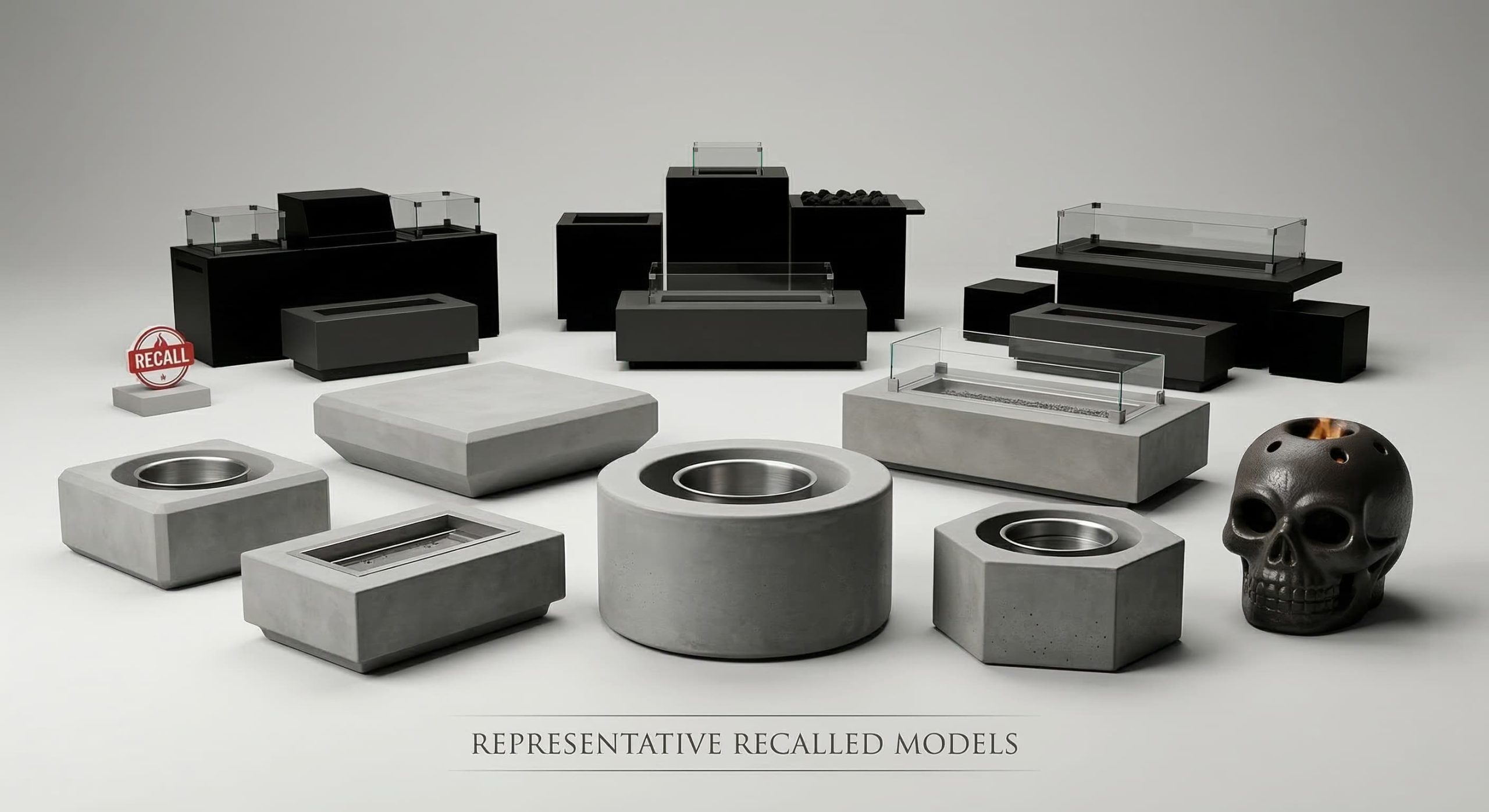
Some of the most common fire pit products we see in injury cases;
The mechanisms behind “flame jetting” and pool fires;
Some of the common injuries and losses fire pit burn victims suffer;
Who can be held responsible in a fire pit burn case (incl. product manufacturers, sellers, resellers, and third-party merchants; and sometimes property owners, too);
What you should do after a fire pit burn incident; and
A few real-world examples from government safety actions and public court records.
Fire Pit/Fire Table Brands & Retailers We're Watching (from Public Safety Notices)
Public safety warnings and recall notices change over time, but several names show up repeatedly in official records and reporting. Examples include FLIKRFIRE tabletop fireplaces, Colsen tabletop fire pits, and tabletop fire pits sold through Five Below. On the gas side, recalls have involved fire tables sold under names like Insignia and Yardbird (Best Buy), Hampton Bay (Home Depot), and Ove Decors / Martha Stewart (Lily Pond) fire tables.
We’re not saying every product with a familiar name is unsafe. We’re saying something simpler: when a severe burn happens, the investigation should start with primary sources – recall notices, warnings, the product’s warnings and instructions, and the chain of sellers.
If you’re on this page, you may be going through something very difficult right now, and our thoughts are with you as you navigate what can often be a confusing world of many questions and few answers. We have attempted to cover some of the most frequently asked questions around fire pit burn cases and fire pit injuries, including questions about defective fire pits and whether you have a case if you’ve suffered a burn injury. But we also want to extend an invitation to you: If you’d rather talk now, instead of continuing to “DIY” your own homework and research, we do offer free consultations and would be happy to speak with you about what you’re going through. We don’t do pressure or gimmicks, just real conversations with real lawyers. At Goings Law Firm, LLC, we don’t have “intake teams,” “intake coordinators,” or “case managers” — for us, a serious point of pride is that we are a boutique team of serious litigators and trial lawyers, backed by a winning staff of paralegals and other legal professionals, and when you call to talk with us, we will put you immediately in contact with a real, experienced trial lawyer, right from the start. So, fill out this form or call or text us at (803) 350-9230 any time you are ready to talk to a lawyer about your fire pit injury.
For Fellow Injury Lawyers
Co-Counsel / Trial Support for Fire Pit Burn Cases
If you’re a personal injury attorney evaluating a serious burn case involving a tabletop fire pit, propane fire table, or other outdoor fire device, you already know these cases can turn into expert-heavy product litigation fast. That’s where we can help.
Goings Law Firm, LLC is a trial-focused team built for high-stakes cases. We regularly work with referring attorneys who sign the client but later want additional firepower—product investigation, expert coordination, discovery strategy, motion practice, and (when needed) a team ready to take the case to verdict.
If you believe co-counseling could increase the value of your client’s case (and reduce the risk of getting out-resourced by corporate defendants), we welcome confidential conversations. Call or text (803) 350-9230.
What counts as a fire pit injury or fire table injury case?
A “fire pit injury” or “fire table injury” case is not one narrow thing. It’s a category of serious injury claims where a person is harmed because something about the fire pit or fire table product (or the way it was provided, installed, or maintained) created an unreasonable risk.
Some cases are pure products liability cases: the pit is defectively designed, defectively manufactured, or sold without adequate warnings. Some cases have a premises component: a landlord, hotel, restaurant, event venue, or vacation rental provides a dangerous setup or keeps using a known hazardous product. And sometimes both things might be true, which is why it’s important to evaluate these cases carefully, with a lawyer who has the experience to know what they’re looking at in your case.
What we look for first is not “Who can we sue?” It’s “What happened, step-by-step?” In serious burn cases, the details matter: what type of fuel was used; what type of fuel was prescribed for the particular product; what kind of reservoir did the product have; who poured what; how long did it sit; was the flame visible; did anyone tried to refuel the fire; what was the weather that day; was the unit on a deck; how close were the combustibles; and did the product have a recall or safety warning history? These (and more) are the kinds of inquiries we make when investigating a potential fire pit burn case or a fire pit burn injury.
When those details line up with known hazard patterns — especially flame jetting, pool fires, or equipment failures in gas fire tables — it becomes a very different conversation than “someone got too close to a campfire.”
“A defect case involves a lot of questions and factors and other legal considerations, but one important concept is foreseeability. If ordinary, careful people can get burned doing ordinary, careful things — like refueling or turning a unit off — that’s a red flag we take seriously.”
The Fire Pit and Fire Table Products We See in Serious Injury Cases
Fire has always carried risk. But certain modern fire pit designs are producing the kind of sudden, severe injuries that tend to show up in safety warnings and litigation. Below are the main categories we see.
Alcohol-Fueled Tabletop Fire Pits and Fire Tables (Rubbing Alcohol, Ethanol, “Bioethanol”)
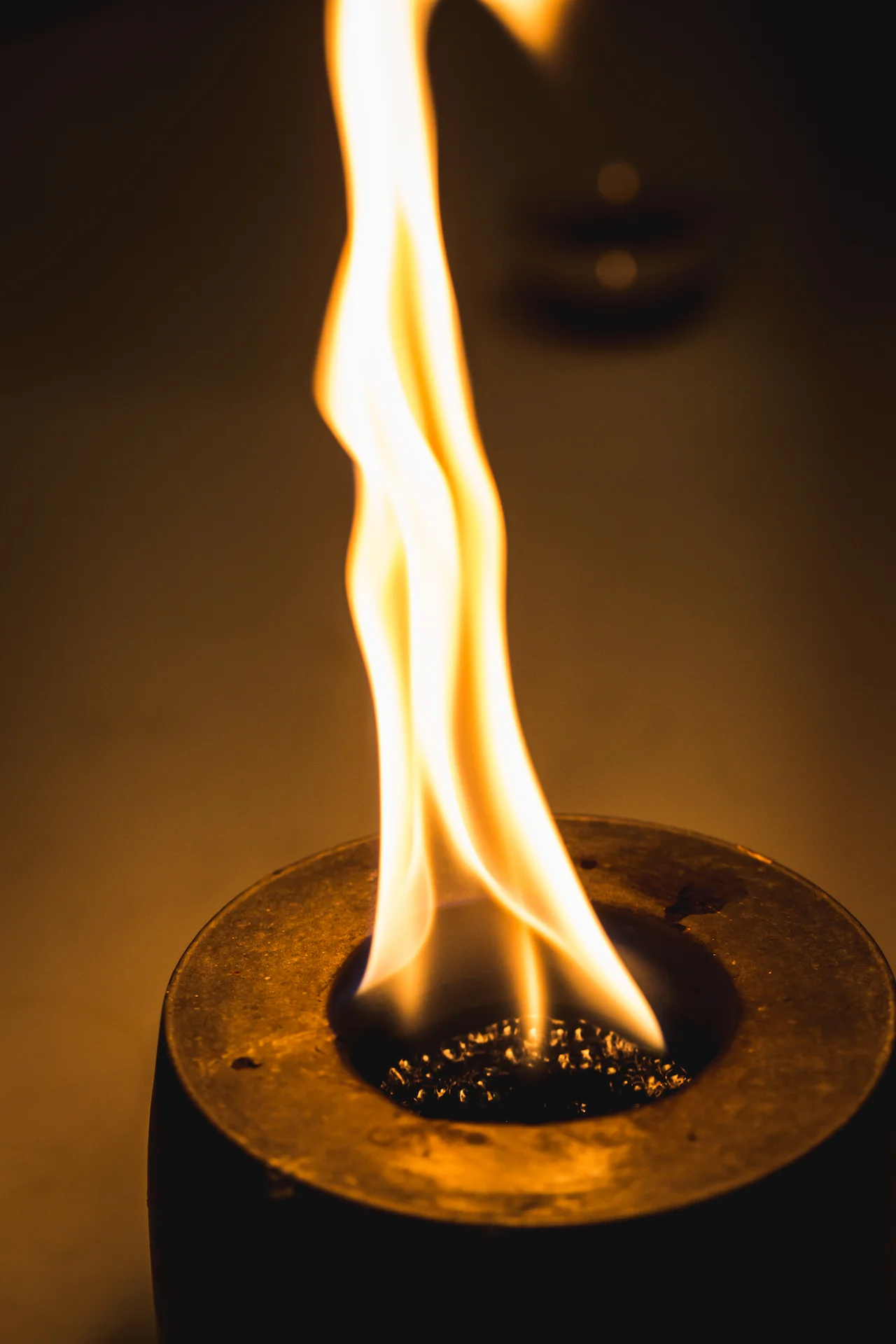
If we had to name one category that is driving the most concern right now, it’s alcohol-fueled tabletop fire pits – sometimes marketed as “fire bowls,” “mini fireplaces,” “fire pots,” “portable fires,” or “tabletop warmth” devices.
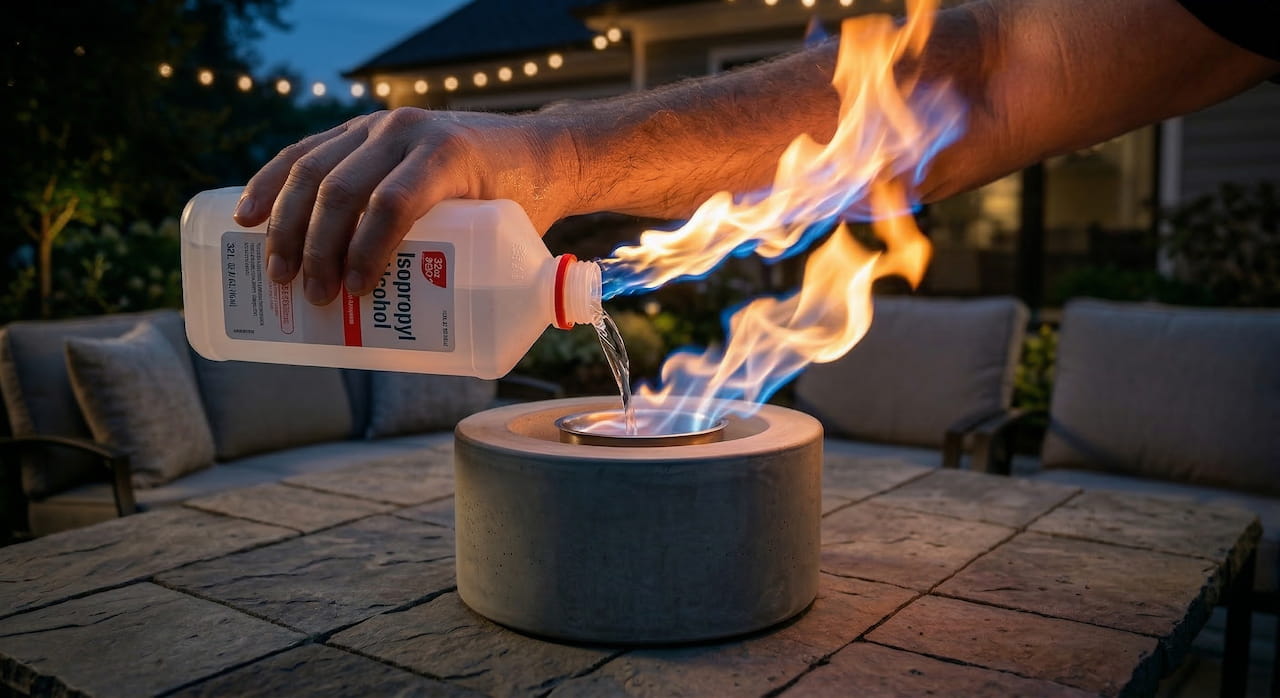
These products often share a similar design: an open reservoir (frequently concrete or ceramic), a stainless steel fuel cup, and instructions that require a user to pour a flammable liquid into that reservoir and ignite it in the same place it was poured. That design creates two well-documented hazards:
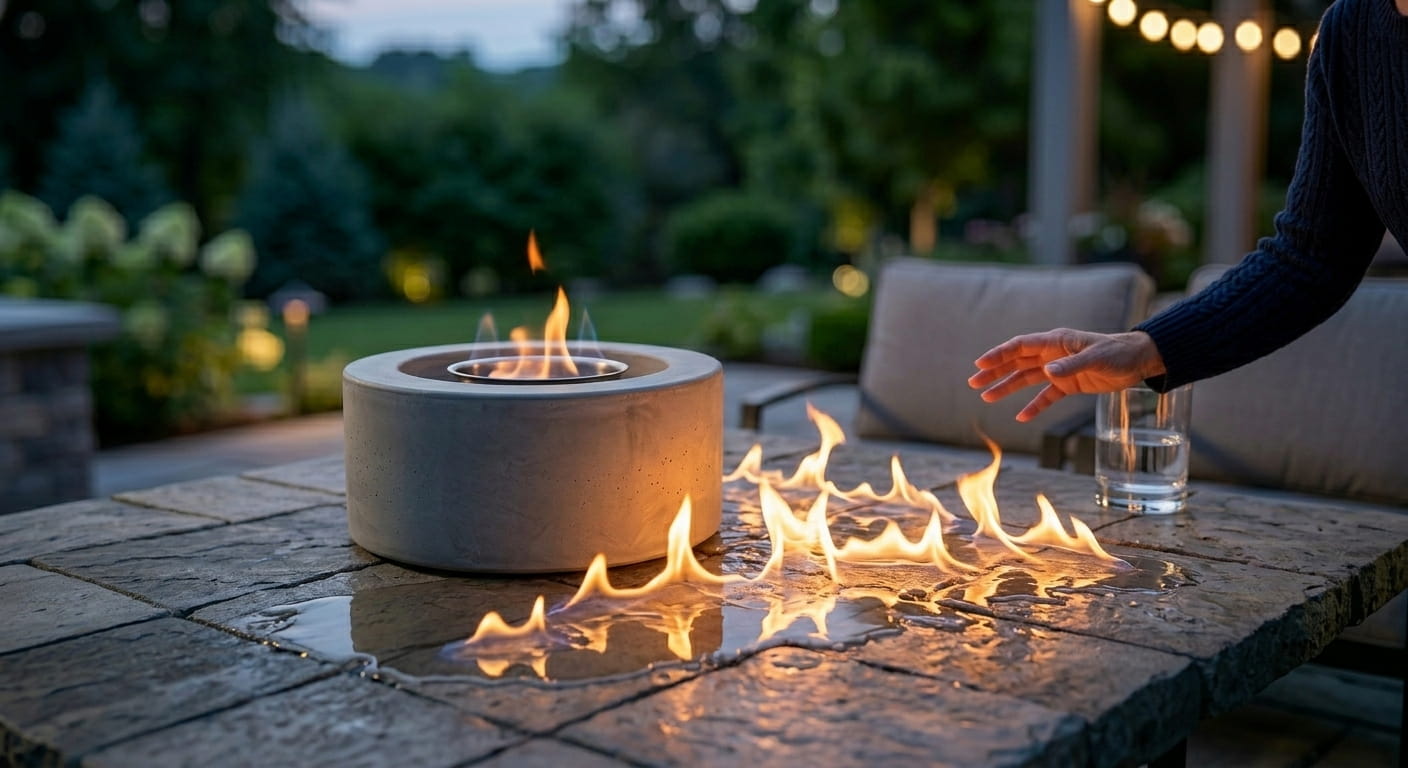
Pool fires: flames can burn across the surface of pooled or spilled liquid fuel. The fire can suddenly become larger and hotter than the user expects and can spread beyond the unit.
Flame jetting: when a user refills while any flame is still present (including a flame that is hard to see), the flame can “flash back” to the fuel container and propel burning fuel outward — essentially creating a fireball effect.
The CPSC has explained that products requiring users to pour and ignite liquid fuel in an open bowl can violate the voluntary safety standard ASTM F3363-19, which was developed specifically to prevent pool fires and flame jetting in liquid-burning fire pit products. The same agency has associated this class of products with multiple deaths and dozens of serious injuries.
That doesn’t automatically mean every incident is a lawsuit. But it does mean the hazard is known, and if someone is seriously hurt, it should be evaluated like a real products case – not dismissed as “carelessness.”
Part of what makes this category so dangerous is how it’s marketed. These devices are often sold as “clean-burning,” “smokeless,” and “simple,” and promoted as a cozy accessory for entertaining — sometimes even as something you can toast marshmallows over. That messaging trains ordinary families to treat an alcohol-fueled open bowl like a candle, when it can behave more like a blowtorch.
“Small doesn’t automatically mean safe. A tabletop fire pit can still create a flash fire that reaches a person’s face, hands, and clothing in an instant.”
One technical detail most consumers never hear: the container matters. In 2023, the U.S. Consumer Product Safety Commission adopted a mandatory safety standard requiring “flame mitigation devices” (often called flame arrestors) on many portable fuel containers, with the rule going into effect in July 2023. These devices are meant to reduce “flame jetting” — the same flashback problem that shows up in fire pit refueling accidents. But rubbing alcohol is sold as an antiseptic, not as “fuel,” and the bottles people pour from typically do not include the same type of flame mitigation devices. For the CPSC’s explanation of what flame mitigation devices are (and why they exist), see this CPSC press release.
Where These Tabletop Fire Pits are Sold (and Why Receipts Matter)
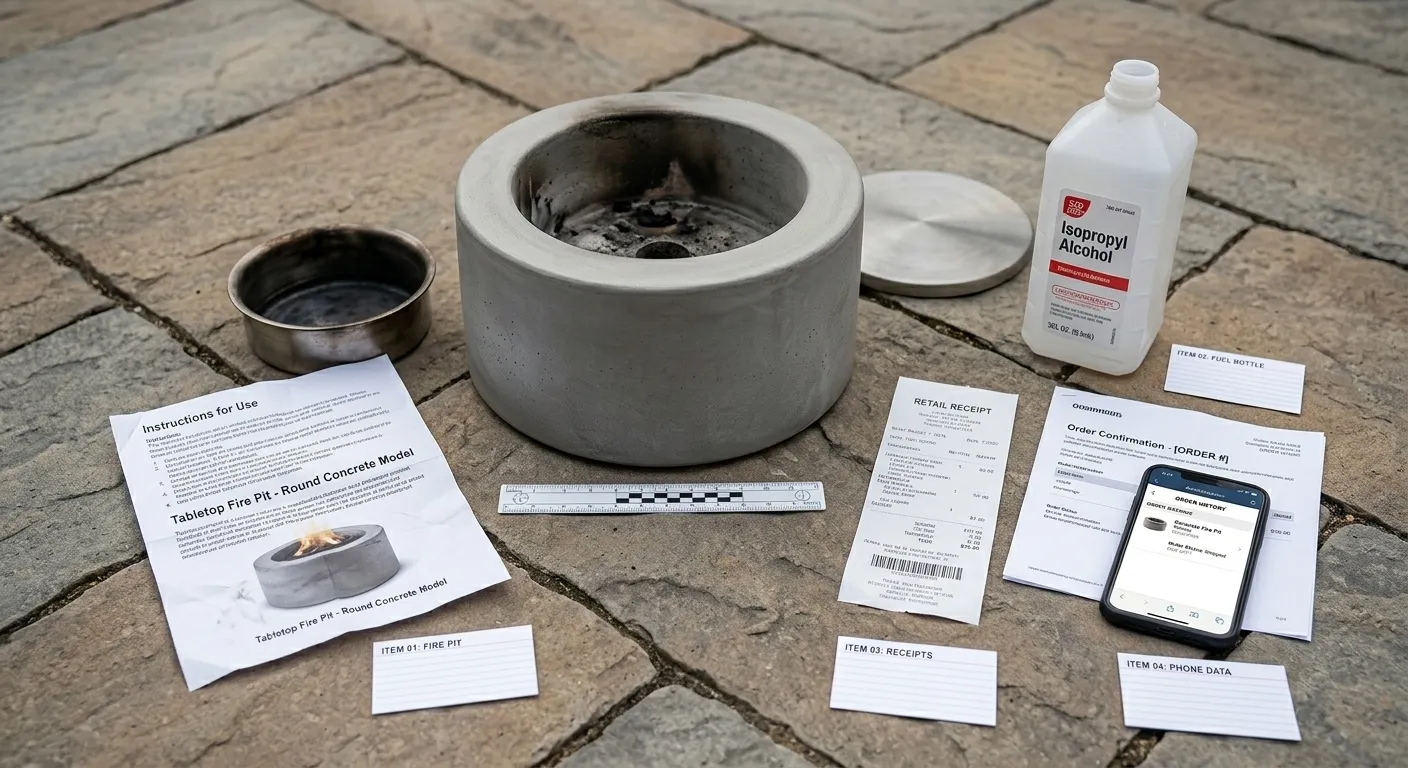
In its product safety warning on FLIKRFIRE, the CPSC reported these units were sold online (including through major retailers like Amazon, Walmart, Wayfair, and others) for roughly $35 to $105 per unit from 2018 through 2024. If you still have the order email, receipt, or packaging, save it — it can help identify the product and the chain of sellers. Read the CPSC warning here: CPSC Product Safety Warning No. 25-073 (FLIKRFIRE).
Where these products are sold matters for two reasons: (1) it helps identify the exact model and warnings you were given, and (2) it helps trace the chain of distribution. For example, the CPSC’s recall notice for Colsen-branded tabletop fire pits states the products were sold online through the manufacturer’s site and through retailers and marketplaces including Amazon.com, Wayfair, Walmart, Sharper Image, and others. And the CPSC’s safety warning on FLIKRFIRE notes those tabletop fireplaces were sold online, including at Amazon.com and a wide range of other e-commerce sites and department retailers.
Marketplace Tip: Check Recall & Safety Alerts (and keep your order history)
Large online retailers and marketplaces sometimes publish recall notices and product safety alerts on dedicated pages, and may restrict recalled products after safety actions. For example, in 2025 the CPSC issued an order requiring Amazon to notify purchasers and post recall releases for certain hazardous products and to maintain recall releases on its “Recalls and Product Safety Alerts” webpage for at least five years.
That doesn’t mean every fire pit listing is unsafe – but it’s a reminder that the online marketplace can be part of the distribution story. If your fire pit was purchased online, keep your “Your Orders” history, screenshots, and seller information.
Real-World Note
CPSC recall records show that propane fire tables and gas fire pits have been sold through many mainstream retailers and online channels. Examples from CPSC recall notices include Ove Decors’ Vanessa and Martha Stewart “Lily Pond” fire tables (sold online through sites including Amazon.com, HomeDepot.com, Lowes.com, Walmart.com, and Wayfair.com), Sunjoy Oakmont LP fire pit tables sold at Big Lots, Hampton Bay gas fire pit tables sold at Home Depot, and Insignia or Yardbird fire tables sold through Best Buy. In other words, these products can appear in the same places families shop for everyday home goods – which is exactly why warnings, design safeguards, and quality control matter.
Gas Fire Pits, Propane Fire Tables, and Other Gas-Powered Outdoor Furniture
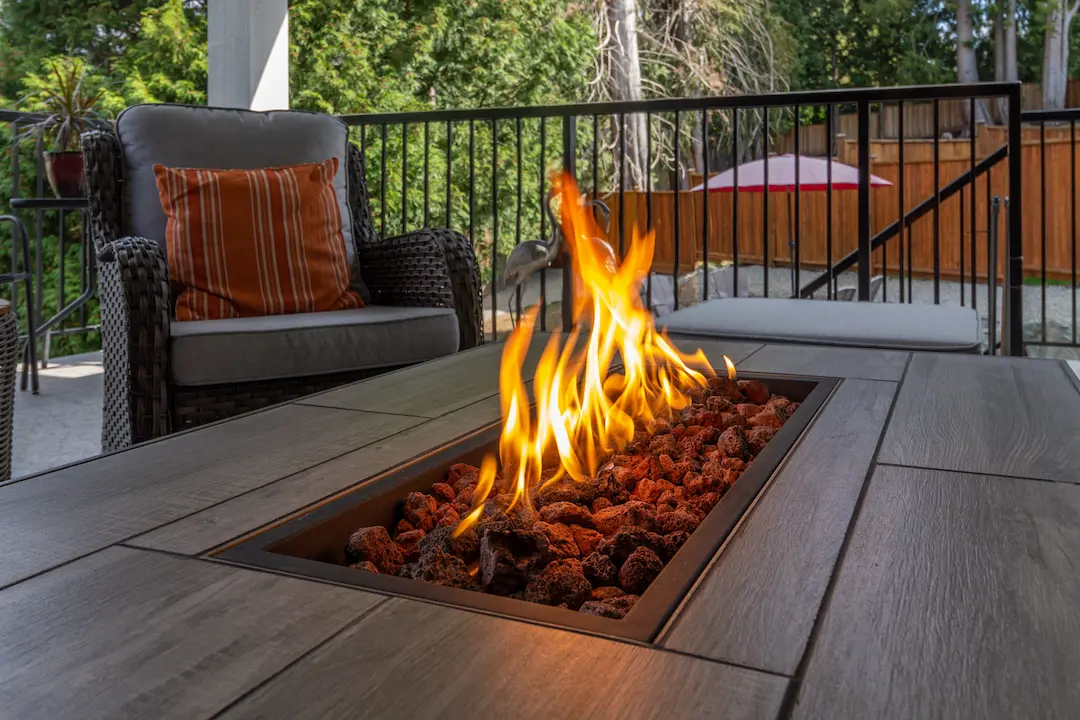
Propane fire tables and outdoor gas fire pits are common on decks, patios, apartment courtyards, rooftop lounges, and at restaurants. Many of these products are built and maintained safely. But when a gas fire feature is defectively designed, incorrectly assembled, or placed into service without proper safety practices, it can cause serious burns and property damage.
A few defect patterns we’ve seen repeatedly in recalls and claims:
Hose Heat Contact or Routing Issues
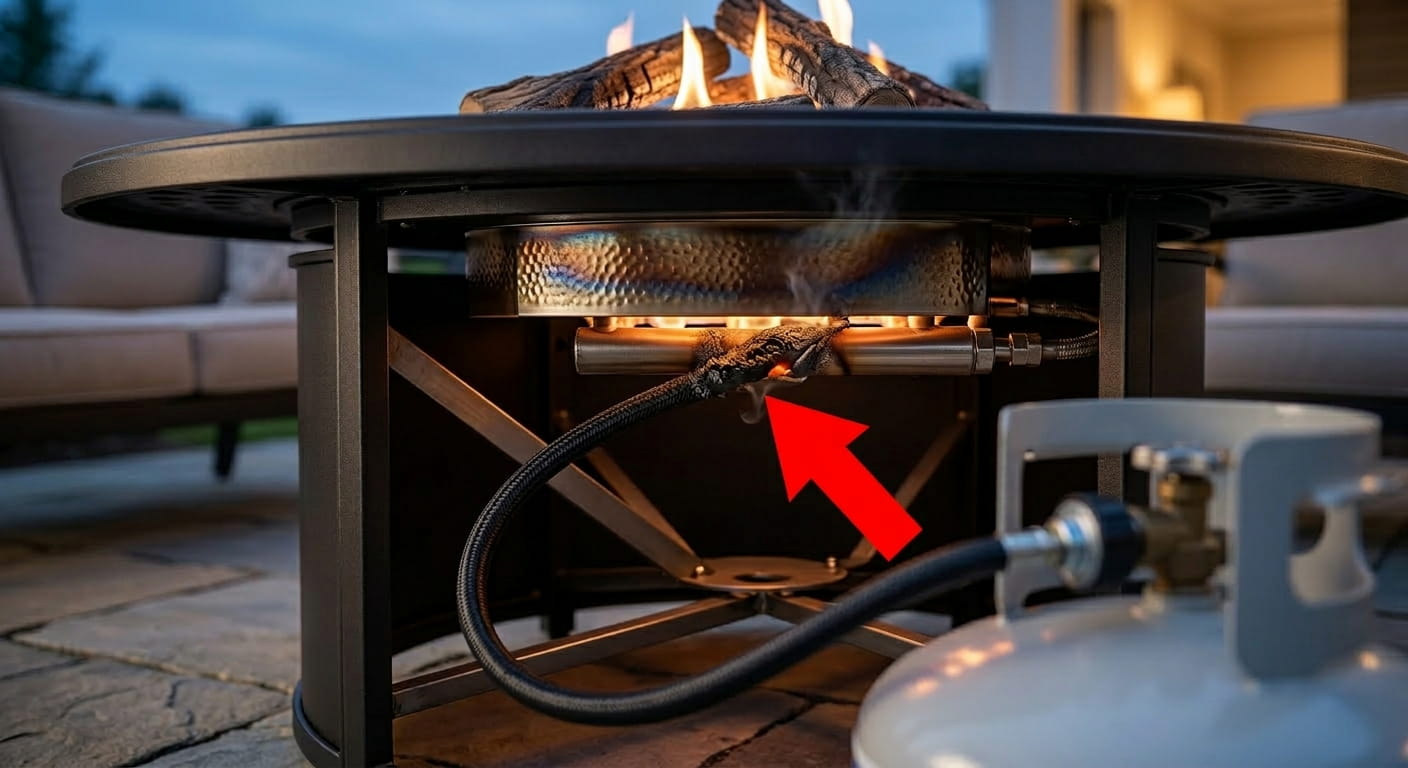
One CPSC recall described a gas hose coming into contact with a heat shield, melting, and igniting the fire table, a clear defect in the table's design.
Missing or Inadequate Heat Shielding
Some recalls describe consumers being burned while trying to turn off the propane tank after use because the unit lacked adequate shielding.
Fill Materials that Fracture or Eject
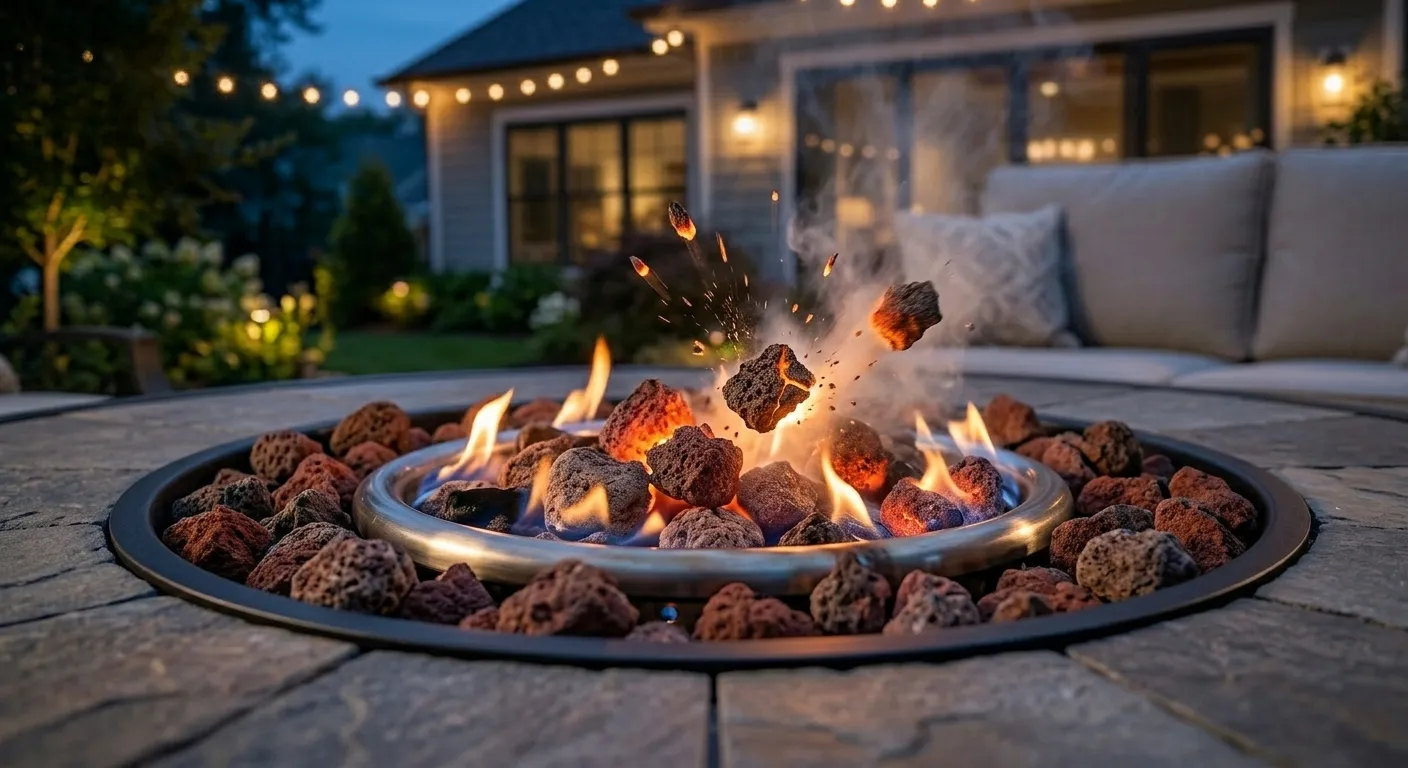
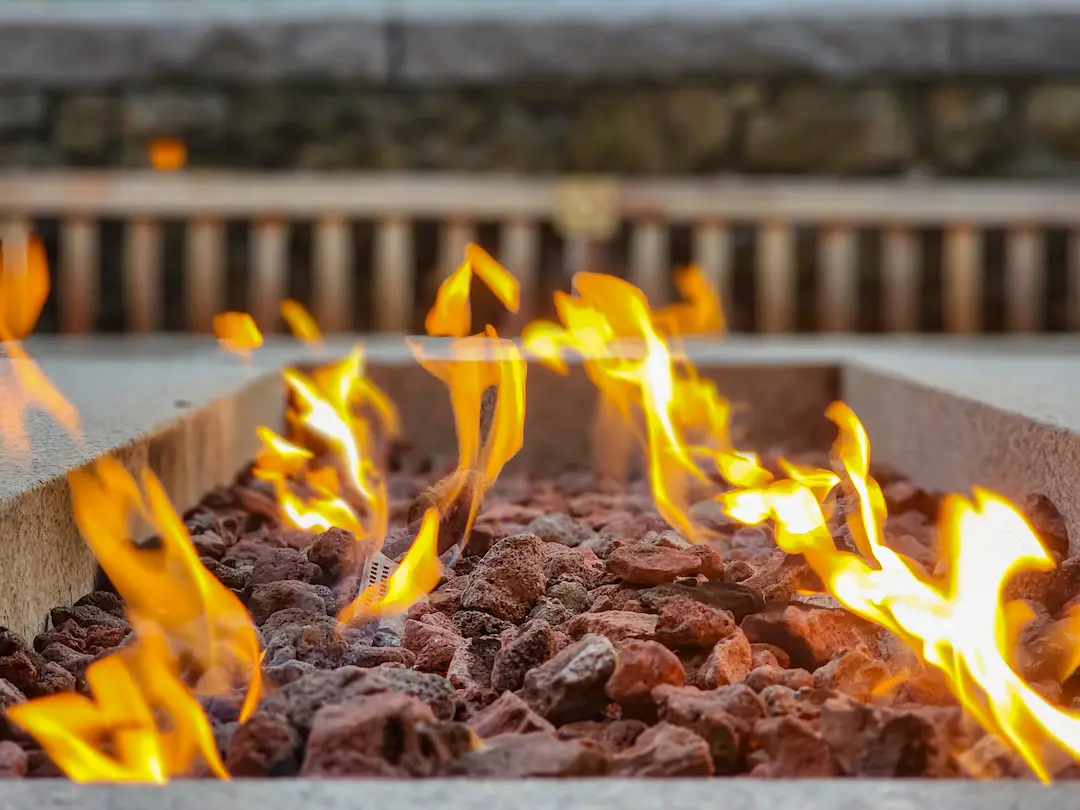
Some fire tables were recalled because lava rocks could explode and eject from the unit, creating burn and impact hazards.
The legal issue in these cases is not whether propane is dangerous in the abstract. Everyone knows fire is hot. The question is whether the product was unreasonably dangerous as designed, manufactured, or sold – and whether ordinary users could have prevented the injury with reasonable care.
“Good engineering anticipates real life. A gas fire table should not require a perfect user and perfect conditions to avoid a catastrophic failure.”
Wood-Burning and “Smokeless” Fire Pits (including Brands like Solo Stove)
Wood-burning fire pits – including modern “smokeless” designs – can still cause severe injury. A cleaner burn is still a burn.
Two patterns show up in serious cases:
Contact burns, especially involving children. Metal surfaces can become dangerously hot and stay hot long after flames look small. A stumble, a curious hand, or a chair placed too close can result in a deep burn quickly.
Ember and spark injuries. Without proper spark screens or safe placement, embers can land on skin or clothing or ignite nearby materials. Wind conditions and deck setups can make this risk worse.
These incidents sometimes turn into premises cases (unsafe placement, poor supervision, missing safety equipment, especially for injured parties who were guests or invitees at a business, restaurant, hotel, event center, or home). Other times, a defect or warning issue is at the center: instability, lack of adequate shielding, unsafe accessory design, or misleading “family-friendly” marketing that invites close proximity without adequate instruction.
Injuries We Commonly See in Fire Pit and Fire Table Incidents
Most fire pit cases are “burn cases,” but burns vary dramatically in severity and long-term impact. In serious fire pit incidents and fire table accidents we commonly see injuries including (but certainly not limited to!) the following:
Second and Third-Degree Burns
When clothing ignites, burns can cover large areas and become especially devastating. And if a user is refilling a fire pit or fire table with fuel and a burn or fireball is ignited, the injuries to arms and limbs can be traumatic.
Inhalation Injuries
These types of injuries can even include asphyxiation and death if a user dies of carbon monoxide poisoning or a similar gas-related issue in an area where a fire pit or propane heater has improper ventilation and venting.
Psychological Harm
Serious burns often involve trauma responses, anxiety, and the emotional reality of scarring and permanent change. Counseling or therapy might be included in someone's recovery after a fire pit or table accident.
Facial and Eye Injuries
These injuries are particularly caused when a person leans over a unit to light it or refuel it.
Falls and Secondary Trauma
People jerk away from fire; that instinct can lead to falls, fractures, or head injuries.
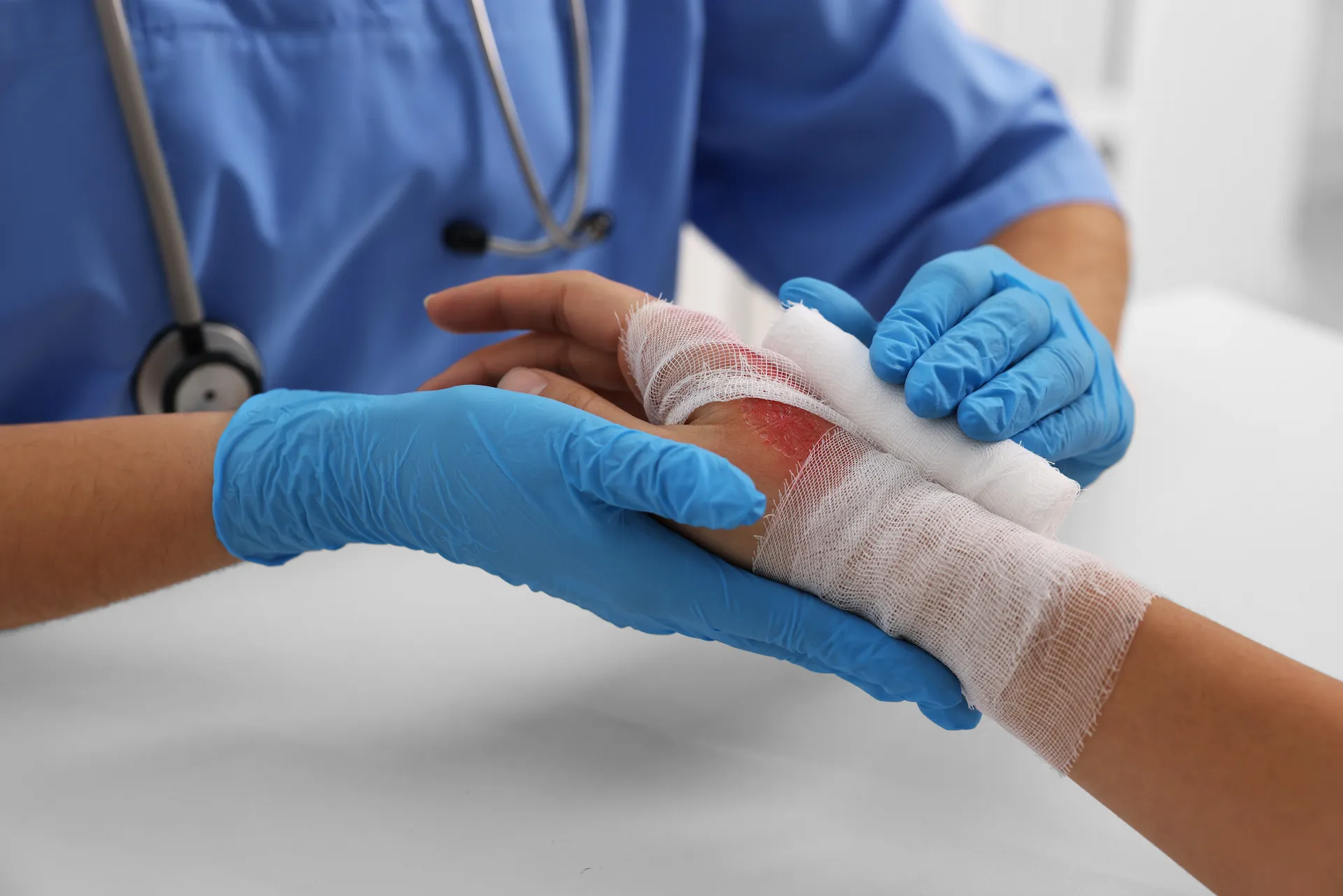
One reason these cases are so complex is that the medical course of treatment can be long and specialized. Burn care often continues long after the ER visit: wound care, grafting, occupational therapy for hands, scar management, and sometimes reconstructive procedures including plastic surgery for burn victims. For families, the financial pressure is real: hospital bills, missed work, travel for specialty care, and long-term follow-up. “In the burn cases we’ve reviewed, the injury isn’t a one-and-done injury that is over after quick treatment – it’s typically going to become a season of life, and a difficult one at that, for the individuals and families affected by it. And for some people, it becomes a permanent new normal that they never asked for.”
— Morgan Drapeau, Trial Attorney at Goings Law Firm, LLC
Why These Accidents Happen: Flame Jetting, Invisible Flames, and Design Traps
When you reconstruct a serious fire pit incident, three typical root causes tend to come into focus, quickly: a design hazard, a warning failure, or a human-factor trap (a product that predictably causes ordinary people to do something dangerous without them realizing it).
Alcohol-fueled tabletop fire pits and fire tables often combine all three of these root causes. They require users to pour fuel into an open bowl, they encourage users to refuel near the burn zone, and they often produce flames that can be hard to see.
This is why “flame jetting” shows up so often in safety warnings. Flame jetting can occur when a small flame (sometimes nearly invisible) ignites fuel as it is being poured, causing an explosion that propels flames and burning liquid onto the user or bystanders. In a family setting, bystanders are often children, spouses, or friends standing close by. The results, as you can imagine, can be horrifying and tragic, and can change families forever.
The CPSC has also described how “pool fires” (which are those fires created in tabletop fire pits or fire tables or fire bowls, in particular) can suddenly create larger, hotter flames that spread beyond the product. When that happens, there may be no meaningful reaction time. If a fuel burns hot enough to cause severe burns in less than a second, the usual “you should have moved faster” arguments fall apart. There can be, quite literally, no way to escape these types of fires.
Gas fire tables have a different set of hazards: heat + routing + pressure. If a hose is too close to a hot component, or if shielding is missing, the product can burn a person at the exact moment they are trying to shut it off. That is not “user error” — that is a safety failure!
When People Say “It Exploded”: Flash Fires, Vapor Ignition, and Why There’s Often No Time to React
In many tabletop fire pit incidents, victims and witnesses use the same word: explosion. That’s not exaggeration. In plain terms, a small amount of liquid fuel can quickly produce flammable vapor, and if that vapor ignites all at once, the flame front expands outward like a fireball. Even when engineers classify the event as a “flash fire” or “fuel vapor ignition,” it can look and feel exactly like a backyard device “blew up.”
The U.S. Consumer Product Safety Commission (CPSC) has described a specific mechanism behind many of these incidents: “flame jetting.” That’s when a flame – sometimes hard to see – ignites fuel as it is being poured, causing an explosion that can propel flames and burning liquid onto the user or bystanders. CPSC has even published a safety video demonstrating how far and how forcefully burning fuel can travel during a flame-jetting event.
To make this more concrete: in July 2025, an ABC7 Los Angeles report described an 18-year-old, Viana Poggi, who was badly burned while making s’mores around a cement tabletop fire pit. According to the report, the pit needed to be refilled with rubbing alcohol — but a small flame inside was still burning and hard to see. When fuel was poured, the fire “jetted” back in a flash, and she ended up in the emergency room with second- and third-degree burns. Poggi described the sensation as being struck by lightning and said the heat was so intense it initially felt cold against her face. For the full story (and additional quotes), see ABC7 Los Angeles.
In Plain English: What “Invisible Flame” Looks Like in Real Life
In the ABC7 story linked about about Viana Poggi, Viana and those around the tabletop fire pit with her all thought the flame was out — and that assumption changed everything. Alcohol flames can be hard to see, and the fire pit can remain hot even when it looks “safe.” That’s why products that require pouring liquid fuel into an open reservoir deserve extra scrutiny (and why the CPSC has issued category-wide warnings).
“A lot of companies defend these types of cases by blaming the victim. But if the danger is hidden — an invisible flame, a poorly shielded control, a hose routed where it shouldn’t be — then that’s an unfair characterization. And fighting back against that narrative is why I recommend people consider getting a lawyer in these types of cases — after all, the defense already has a team of lawyers going against you, and fighting against that system on your own is not a fair fight.”
Were You Injured by a Defective Fire Pit or Fire Table?
Being injured because of a defective product can have a massive impact on your life. Our defective fire pit injury lawyers can help you hold the party responsible for what happened accountable.
We don’t mean to make readers unreasonably fearful of the hidden dangers that might be lurking in their backyard. But we do believe in telling the truth about what is happening nationwide, using primary sources whenever possible. The public record – including safety warnings, recalls, and court filings – shows that these hazards are not at all hypothetical.
Here are just a few examples that illustrate the landscape out there today, as pertains to fire pits, fire tables, and burn injuries and other injuries associated with fire pit, fire table, tabletop fire pit, and propane heater accidents:
Example 1: CPSC consumer alert on liquid-burning fire pits
In a national consumer alert, the CPSC urged consumers not to buy or use fire pits meant to burn pooled alcohol or other liquid fuel. The agency described these products as “extremely dangerous,” associated them with two deaths and at least 60 injuries since 2019, and explained the mechanism of injury: pool fires and flame jetting. The alert also notes that fuels like isopropyl alcohol and ethanol can burn at temperatures over 1,600°F and can cause third-degree burns in less than one second. Source: CPSC Consumer Alert (Dec. 19, 2024). Related reporting: CBS News coverage.
Example 2: CPSC warning on FLIKRFIRE tabletop fireplaces
The CPSC issued a product safety warning urging consumers to stop using FLIKRFIRE Tabletop Fireplaces. According to the agency, flame jetting contributed to the June 2024 death of an elderly couple who were seriously burned when a third person attempted to refill a unit that appeared to be extinguished. The warning also reported other incidents involving extensive third- or fourth-degree burns. Source: CPSC Product Safety Warning No. 25-073 (FLIKRFIRE). Additional context: PEOPLE (Stolzenburg family story).
Example 3: Colsen tabletop fire pit recall with reports of severe burns
The CPSC recalled certain Colsen-branded indoor/outdoor tabletop fire pits. In the recall notice, CPSC reported 31 reports of flame jetting or flames escaping from the fire pit container, resulting in 19 burn injuries. Two incidents involved third-degree burns to more than 40% of the victims’ bodies, and the notice reports that at least six incidents involved outcomes like surgery, admission to burn treatment facilities, physical therapy, loss of function, or permanent disfigurement.
Example 4: A publicly filed federal court order describing allegations in a tabletop fire pit burn case
Public court records can also help illustrate what these cases look like when they reach litigation. In a products liability case filed in the Southern District of Florida (Hominski v. Gusar, LLC, et al.; case number 24-cv-21590), a federal court order notes that the plaintiff alleged she suffered severe injuries in July 2023 when a rectangular tabletop fire pit purchased through Wayfair’s website in May 2023 malfunctioned, causing third-degree burns to over 40% of her body.
That is not a final “finding” on the merits – it is an allegation that must be proved. But it is a stark example of what a flame jetting or pool-fire-type incident can potentially do to someone, and it shows that these cases are being pursued in real courtrooms, not just talked about on social media. Public record: Hominski v. Gusar, LLC, et al. (S.D. Fla.) Order (govinfo PDF).
Example 5: Gas fire table recalls show recurring design and assembly hazards
Alcohol-fueled tabletop products are drawing major attention nationwide right now, but let’s not forget that gas fire tables have their own recall history, too. A few examples from CPSC records:
A recall describing a gas hose that can contact a heat shield, melt, and ignite the fire table (fire hazard).
A recall describing an incorrectly installed burner kit hose that can melt and ignite.
A recall describing consumers being burned while turning off a propane tank because the bowl base lacked a heat shield.
A recall alert describing lava rocks that can split and eject from a fire table, posing burn and impact injury hazards.
We include these examples because they show a consistent theme: when a product is designed, built, or assembled in a way that allows heat or flame to reach the wrong place, people get hurt – often at the exact moment they are trying to use the product safely. Example recall: Best Buy Insignia & Yardbird fire tables (lava rocks) recall. Example recall: Ove Decors fire tables recall.
Example 6: ABC7 Los Angeles reporting on tabletop fire pit “flame jetting” injuries (Viana Poggi)
In July 2025, ABC7 Los Angeles reported on 18-year-old Viana Poggi, who suffered serious burns while making s’mores around a cement tabletop fire pit. The report describes a refill attempt with rubbing alcohol while a small flame remained inside the pit — leading to a sudden flare and emergency treatment for second- and third-degree burns. Source: ABC7 Los Angeles (July 25, 2025).
Example 7: Five Below tabletop fire pit recall (flash fire and flame-jetting risk)
In September 2025, the CPSC announced a recall of tabletop fire pits sold at Five Below stores and online after reports that alcohol fuel could splash or leak from the reservoir during use and/or ignition, creating a flash fire that can spread and produce larger flames escaping the unit. Even when injuries are not yet reported in a particular recall, the engineering point is important: when a product design allows fuel to escape the reservoir during normal ignition or use, the risk moves from “contained flame” to “moving fire.”
Who is legally responsible in a fire pit or fire table burn injury case?
Responsibility depends on the facts, but fire pit injury and fire table injury cases often involve a chain of accountability.
In product-related cases, potential responsible parties can include the manufacturer, any company that branded or rebranded the product, importers, distributors, and the retailer or online seller who sold it. Even if the product is sold through a large marketplace, there can be multiple entities in the chain who had the power to make the product safer – or to stop selling it. It is important that all of those parties be able to be held accountable, too, because in the case of retailers for example — who often want to shift blame and say they had nothing to do with how the product was made — if they know something is dangerous but then keep selling it, then they are potentially just as liable as the company who made it in an unsafe manner in the first place.
In premises-related cases, responsibility can include property owners, landlords, and businesses that provided the fire pit or fire table and who potentially created unsafe conditions in and around its usage: poor placement on a deck, improper clearances, missing fire safety equipment, failure to maintain a gas line or shutoff, or ignoring known hazards. If someone is going to put a product like this in a place where it could impact foreseeable users of the product, they potentially have certain duties to ensure that product is safe and free from dangerous conditions. Again, these are fact-specific inquiries and only a lawyer can really walk you through what you’re dealing with in your own fire pit accident or fire table injury, but we like to say that common sense shouldn’t get checked at the door when you start investigating a case like this. And if a property owner knowingly put an unsafe product in front of their guests, that ought to be a problem.
South Carolina has a strict liability framework for defective products. Generally speaking, when a seller places a product into the stream of commerce in a defective condition that is unreasonably dangerous and it causes physical harm, that can create liability even if the seller claims they exercised care. There are defenses and complexities that come into bear in cases like these though, of course, which is another reason early legal evaluation matters.
One practical point that surprises many families: the “seller” you clicked online may not be the only company in the chain. Many fire pit products are manufactured by one entity, imported or branded by another, and sold through a marketplace, big-box retailer, or social platform storefront. That’s why keeping your order history and seller information matters – especially for purchases through marketplaces like Amazon or retailers like Walmart, Wayfair, Home Depot, Lowe’s, and others. In some CPSC recall notices, the agency lists the specific retailers and e-commerce sites where recalled products were sold, and those details can help identify every entity involved in placing the product into the stream of commerce.
Example retailer listings can be found in the CPSC’s notices for Colsen and FLIKRFIRE.
“A dangerous product can come to market through a long trail of involved parties, including designer, manufacturer, importer, distributor, seller, and others. When we take a fire pit case or fire table burn injury case, we follow that trail until we find the people who could have prevented the injury.”
— Robert F. Goings, Founder and Trial Lawyer at Goings Law Firm, LLC
What to Do after a Fire Pit Injury
Hopefully something like this never happens to you or to a loved one. But if it does, it’s important to be prepared and to make sure that you handle things (especially physical evidence) the right way. Getting a lawyer involved early can help guide you on this front, but below are some common steps we advise people to consider if they have suffered a fire pit burn injury or similar fire table accident:
First: Get medical care. Serious burns are a medical emergency. Follow your doctors’ guidance and don’t delay follow-up. Make sure you keep copies of all bills and records associated with your medical care, because they will be important in establishing your case if you end up having a valid personal injury claim due to a defective fire pit or similar fire table burn injury.
Second: Preserve evidence. In product cases, evidence is not a luxury – it’s the foundation of any case. If someone was seriously hurt, do not “repair” the unit, throw it away, or return it. Don’t send it back to the manufacturer and don’t take it back to the store that you bought it from, even if those places are asking for it or are telling you to destroy it or otherwise dispose of it. Treat the evidence as critically important to your case and secure it so it can’t be used again, but keep it intact. Again, don’t try to “fix” the fire pit, fire table, or heater, and don’t try to repair it or do anything to otherwise tamper with it or change it from the state it was in at the time of the accident.
Third: Preserve the fuel container and accessories. In flame jetting cases, the fuel container is often part of the mechanism of injury. Don’t toss it, don’t clean it, and don’t assume it’s irrelevant. As mentioned above in #2, these cases often turn on the physical evidence available, so making sure that you preserve all evidence following a fire table or fire pit injury or other accident is extremely important. If you have a lawyer, involve them early and get them to help you preserve the evidence and set up a chain of custody for it so that you avoid problems later with the quality or integrity of your evidence.
Fourth: Document the scene while it is still fresh. Photos and video of the setup (distance to chairs, surfaces, nearby combustibles, lighting conditions) can matter later. Get names and contact information for witnesses. This can be hard to do or to remember to prioritize when you’re dealing with injuries and loved ones who might be hurt, but it is important to try to secure the scene and capture this type of evidence early if at all possible. Again, if you have a lawyer involved, they should be able to help you with this.
Fifth: Be careful about early calls from insurers or claim departments. They often want a recorded statement before you fully understand what happened, and before anyone inspects the product. Adjusters, claim handlers, and manufacturer representatives also often seem extremely kind, helpful, and welcoming over the phone and try to create rapport with you by expressing sympathy to you. All of these tactics are business tactics, however, that are designed to get you to say something that can hurt your case or designed to get you to accept a lowball settlement offer or payoff figure for your fire table accident or fire pit burn injury. You should never be talking to adjusters and claim handlers about such matters without an attorney present. Be extremely careful about these types of communications and try to get a lawyer involved early to protect your interests right from the start.
A good rule of thumb to stick to: talk to a lawyer early if your injury is serious. In a complex products case, early preservation letters and inspection protocols can make all the difference in your capacity to eventually recover from the injuries you have suffered from defective or otherwise dangerous fire tables, fire pits, and similar heaters and other products.
“Evidence preservation and early intervention are key in products liability cases involving fire pits and fire tables. If you have suffered a serious injury from an exploding fire pit or otherwise defective fire table, I know that you will be focused on medical treatment early, and rightly so. But don’t forget to try to speak to a lawyer as soon as possible so that you ensure that your interests are protected in the event of an accident — that is the number one piece of advice I give to people who have been hurt in fire table accidents or injured by defective fire pits and heaters.”
— Franklin McGuire, Trial Attorney at Goings Law Firm, LLC
What compensation can be available in a serious burn case?
Every case is different, but burn cases often involve damages that extend far beyond the first hospital bill.
Indeed, medical expenses are usually the start of the inquiry, not the end; we would want to consider expenses you’ve incurred like emergency care, surgery, grafting, burn unit admission, follow-up procedures, scar management, occupational therapy (especially for hands), and sometimes reconstructive work years later.
Lost income can also be a significant driver in the valuation of a fire pit burn case or fire table injury case. Many burn victims are out of work for a long time. Some return with restrictions. Others cannot return to the same job at all – particularly when the injury involves hands, mobility, or heat exposure. When you work with a lawyer, they should be able to help you track, research, and document all of this information so that you are getting the maximum possible compensation under the law for your fire table injury or fire pit burn case.
Pain and suffering in burn cases is real and often prolonged, too. There is the acute pain of the injury, of course, but there can also be ongoing pain, sensitivity, itching, and limitations. Disfigurement and scarring can change the way a person feels in their own body.
In fatal cases, wrongful death claims can seek accountability for what the family has lost, and wrongful death cases have their own calculus around damages that you need to consider.
In some cases, punitive damages may be available when a company’s conduct reflects a reckless disregard for safety. That depends on the facts and the law, but it is something that you should definitely have your attorney investigate if you believe that a manufacturer, distributor, or retailer might have some level of particularly punitive exposure for their conduct in any sort of defective fire table or defective fire pit case.
“A burn case is about dignity as much as dollars. The law can’t rewind time, but it can require the people who caused the harm to carry the financial burden of it.”
— Morgan Drapeau, Trial Attorney at Goings Law Firm, LLC
Why People Choose Goings Law Firm, LLC for High-Stakes Injury Cases
A serious products case is not a volume game. It takes time, resources, experts, and trial skill. You don’t need a cheesy billboard attorney or a law firm that invests more in their marketing department and TV commercials than they do in cases and clients. In cases like this involving serious injuries from fire pits and fire tables where manufacturing defects or other legal issues might be in play, you need serious litigators in a boutique firm setting. You need trial lawyers who have seen cases like this before and who understand, like second nature, the right way to handle the high-stakes and long-term litigation that can arise in cases like this.
Our firm is built for high-stakes litigation. Robert F. Goings has been recognized as one of the leading trial lawyers in South Carolina and has secured some of the state’s most significant verdicts, including a $13.5 million jury verdict with punitive damages and a $5 million wrongful death medical malpractice verdict. He has also been selected to Super Lawyers’ Top 10 attorneys in South Carolina and has held leadership roles within the American Board of Trial Advocates (ABOTA) and other leading attorney advocacy groups. Those details matter for one practical reason: corporations and insurers evaluate risk through one question – “Are these lawyers actually willing and able to try this case?”
When we accept a catastrophic injury case or products liability case at Goings Law Firm, LLC, we prepare it from Day 1 as if it will be tried in court: we pursue evidence preservation, product inspection, expert engineering analysis when appropriate, medical documentation, and a litigation plan designed to hold up under cross-examination.
We also believe in speaking like humans. If you call us after a fire pit injury, you are probably exhausted. You may be in shock. You may be trying to care for a hurt child or a spouse while juggling medical appointments and paperwork. Our job is to meet you where you are at, to answer the multitude of questions you probably have, and then to step into your shoes to carry your legal burdens so that you don’t have to — all while still keeping you informed every step of the way.
“Trial work is not about theatrics. It’s about preparation, dedication, and keeping the human side of the story right at the forefront of the case. When you prepare relentlessly, the truth shows up clearly — and that’s what wins cases.”
— Robert F. Goings, Founder and Trial Lawyer
Frequently Asked Questions about Defective Fire Pit Injuries
Possibly. Recalls and safety warnings are powerful evidence, but they are not required. The core question is whether the product was unreasonably dangerous as sold and whether that defect (design, manufacturing, or warnings) caused your injury.
They might try. But in many flame jetting cases, refueling is the predictable behavior the product invites. If a product design and warnings do not adequately address invisible flames, flashback risk, and the dangers of pouring fuel near a burn zone, “blame the user” is not the full story.
If someone was seriously hurt, talk to a lawyer before returning or disposing of the product. The product (and fuel container) may be key evidence, and returning it can make it harder to prove what happened.
Deadlines vary by state and by claim type. In South Carolina, many personal injury and wrongful death claims have a three-year statute of limitations, but exceptions exist and some cases have shorter deadlines. The safest approach is to talk to a lawyer promptly.
It depends on the design, the fuel, and how the product is intended to be used. The biggest red flag is a unit that requires you to pour liquid fuel into an open bowl/reservoir and then ignite the pooled fuel in that same location. That “open reservoir + pour + ignite” design is the exact pattern the CPSC has warned can lead to uncontrollable pool fires and flame jetting. If your product works that way, treat it as a serious hazard and consider discontinuing use. Sources: CPSC consumer alert.
Flame jetting is a flashback phenomenon: a small flame (sometimes hard to see) ignites fuel vapors as you pour, and the flame can “jet” back toward the container and the people nearby. The CPSC describes it as a blowtorch-like effect, and it can happen fast enough that there’s no meaningful time to react. Sources: CPSC flame mitigation explanation.
Possibly. Many of these incidents happen during normal, predictable use — exactly the use the product invites. In product cases, the key questions are whether the product was unreasonably dangerous as sold, whether warnings and instructions were adequate, and whether the defect caused the injury. “You used the fuel we suggested” does not automatically defeat a claim; sometimes it strengthens it.
Get medical care first. Then, if you can do so safely, preserve evidence: keep the fire pit, fuel container(s), packaging, instructions, and any purchase confirmation. Take photos of the product, the scene, and your injuries. If there were witnesses, write down names and contact information. These early steps can matter a lot in products cases.
If you believe a product is dangerous, you can consider reporting it to the CPSC through SaferProducts.gov. Reports help safety officials identify patterns, evaluate hazards, and consider warnings or recalls. (This is separate from pursuing a legal claim.) Sources: SaferProducts.gov.
Online marketplaces can be part of the chain of distribution, and some lawsuits nationwide have alleged that major platforms played a role in getting dangerous products to consumers. Every case depends on the facts (product, seller, warnings, and the state’s law), but it’s one more reason to keep your order confirmation and any listing screenshots if you still have access to them. Sources: CPSC FLIKRFIRE warning (lists online sellers).
Not necessarily. In some products cases, multiple entities may share responsibility: manufacturers, importers, distributors, retailers, and others in the supply chain. If a manufacturer is gone, there may still be viable claims against other responsible parties depending on what the evidence shows.
Not always. Some fire pit cases may be handled individually (especially when injuries are severe), while others may proceed as coordinated litigation. The right approach depends on the facts of your case and what’s happening nationwide with similar claims.
Yes. Many serious burn cases involve long-term issues like scarring, loss of function (especially with hands), nerve damage, infection risk, and psychological trauma. Some people require skin grafts, follow-up procedures, or scar management for years.
Glossary of key terms (fire pit burns, flame jetting, and defective products)
Alcohol-fueled tabletop fire pit: A small fire feature that burns a liquid fuel (often isopropyl alcohol or ethanol) in an open reservoir. These are sometimes marketed as “smokeless” or “clean-burning.”
Bioethanol / ethanol fuel: A liquid fuel used in some tabletop burners. Even when marketed as “clean,” it is still a flammable liquid that can create dangerous vapors and flash fires.
Isopropyl alcohol (rubbing alcohol): A common household antiseptic that some products instruct consumers to use as a fuel. The CPSC warns it can burn hot enough to cause severe burns very quickly.
Open reservoir: A design where liquid fuel sits exposed in a bowl/tray rather than in a sealed or protected combustion chamber.
Pool fire: A fire that spreads across the surface of pooled or spilled liquid fuel. Because the fuel is already spread out, the fire can surge suddenly and expand beyond the device.
Flame jetting: A flashback phenomenon where a flame ignites fuel vapors during pouring/refueling and can “jet” back toward the container and nearby people, sometimes described as a blowtorch-like effect.
Invisible flame: Some alcohol flames can be difficult to see, especially in daylight, leading users to believe the fire is out when it is not.
Flame mitigation device / flame arrestor: A safety device designed to impede a flame from propagating back into a fuel container, reducing flame jetting risk. CPSC has required these devices on many portable fuel containers.
Recall vs. warning: A recall typically offers a remedy (refund/repair/replacement) and requires sellers to stop distributing the product. A safety warning or consumer alert may not provide a remedy but signals a hazard.
Chain of distribution: All the entities involved in getting a product to a consumer: manufacturer, importer, distributor, retailer, and sometimes an online marketplace.
Failure to warn: A product liability concept where warnings or instructions are inadequate, missing, misleading, or not prominent enough to inform consumers of real risks.
Evidence preservation: The process of protecting and keeping key items and information (product, fuel container, packaging, photos, purchase records) so the cause of an incident can be investigated.
Talk to a Fire Pit Injury Lawyer Today
If you were burned by a tabletop fire pit, a propane or alcohol-fueled fire table, or another outdoor fire feature, you deserve answers and you deserve a legal team that can handle a serious case.
Call Goings Law Firm, LLC at (803) 350-9230 for a free consultation. We’ll listen, ask the right questions, and tell you plainly whether we believe there is a case worth pursuing. If we can’t take it, we’ll do our best to point you toward the right next step.
If the injury is recent, preserve the product and any fuel containers, take photos, and reach out as soon as possible.




 The legal issue in these cases is not whether propane is dangerous in the abstract. Everyone knows fire is hot. The question is whether the product was unreasonably dangerous as designed, manufactured, or sold – and whether ordinary users could have prevented the injury with reasonable care.